



Why B2B Marketing Budgets Keep Underperforming
Why B2B Marketing Budgets Keep Underperforming
Most B2B marketing budgets are built on incomplete information. Teams allocate spend based on last year’s numbers, platform-reported attribution that overcounts every channel, and planning assumptions that have not been stress-tested against actual revenue outcomes. The result is not a budgeting failure. It is a data failure. The inputs feel rational, but they are not grounded in a clear picture of what is actually driving pipeline versus what is merely correlating with it.
AI has changed that equation in a specific and meaningful way. Not by automating the decision, but by improving the quality of the information that goes into it. The platforms on this list give B2B marketing leaders the infrastructure to move from budget allocation as an annual ritual to budget allocation as a live, continuously refined strategic function. They cover the full range of decisions that determine where money goes: attribution, forecasting, media mix modeling, account intelligence, and the data infrastructure that ties all of it together.
TL;DR — Top Tools for AI-Powered B2B Budget Decisions
TL;DR — Top Tools for AI-Powered B2B Budget Decisions
1. Stratos by Directive: Directive’s proprietary AI platform unifies CRM, paid media, SEO, and revenue data to give B2B marketing teams real-time budget intelligence, LTV:CAC modeling, and media mix forecasting. Access is exclusive to Directive clients and is built into how the agency delivers, not sold as a separate product.
2. HockeyStack: A B2B analytics and attribution platform that connects campaigns, website behavior, and CRM data into a single view. Strong on pipeline attribution and buyer journey visualization, with AI-driven insights that surface which spend is moving deals and which is not.
3. 6sense: An AI-powered revenue platform that identifies in-market accounts before they engage, enabling B2B teams to allocate budget toward the highest-probability opportunities rather than spreading spend across an unqualified TAM.
4. Dreamdata: A B2B revenue attribution platform that automatically collects, models, and activates GTM data across the full customer journey. Particularly strong for teams that need to connect content and campaign spend to closed revenue with clear, auditable logic.
5. Northbeam: An attribution and media mix modeling platform that uses machine learning to give marketing teams a channel-level view of true contribution to revenue, including scenario planning tools that let teams model budget allocation decisions before committing spend.
Why the Right Tools Change the Budget Conversation
Why the Right Tools Change the Budget Conversation
Proprietary AI platforms and third-party tools are not the same category, but they are solving adjacent problems. Both are about improving the quality of the information that goes into budget decisions. The B2B teams that are winning the budget conversation in 2026 are the ones that can walk into a planning meeting with data that connects spend to pipeline to revenue, not just impressions and click-through rates. The platforms on this list make that possible.
The Most Expensive Budget Mistake Is Invisible
Bad budget allocation doesn’t always show up as a failed campaign. More often it shows up as a campaign that looked successful by the metrics your team was tracking, while quietly underperforming on the metrics that actually matter. Last-touch attribution tells you which channel got credit for the conversion. It doesn’t tell you which channel created the conditions for it. AI-powered attribution closes that gap by modeling the full customer journey and fractionally crediting every touchpoint that contributed to the outcome. For B2B teams with multi-month sales cycles and complex buying committees, that distinction is not academic. It can shift millions in annual spend.
Budget Intelligence Compounds Over Time
The real value of AI in budget planning is not a one-time optimization. It is a continuously improving model that gets more accurate as more data flows through it. Every campaign, every conversion, and every lost deal is an input that sharpens the next allocation decision. Teams that invest in data infrastructure early accumulate a compounding advantage over teams that rely on manual analysis and periodic reviews. By the time a competitor catches up with the tools, the team that started earlier has 12 to 18 months of additional production data informing every recommendation. That gap is hard to close.
The CFO Conversation Is Now a Data Conversation
Marketing budget justification used to be a presentation. Now it is a data review. CFOs and boards are increasingly fluent in the language of CAC, LTV:CAC, pipeline velocity, and payback period, and they expect marketing leaders to speak that language fluently. The platforms on this list give marketing teams the infrastructure to do exactly that. Not by dressing up activity metrics, but by building a defensible, revenue-grounded case for every dollar in the plan.
1. Stratos Directive
1. Stratos by Directive
The AI marketing platform behind every budget decision we make for our clients
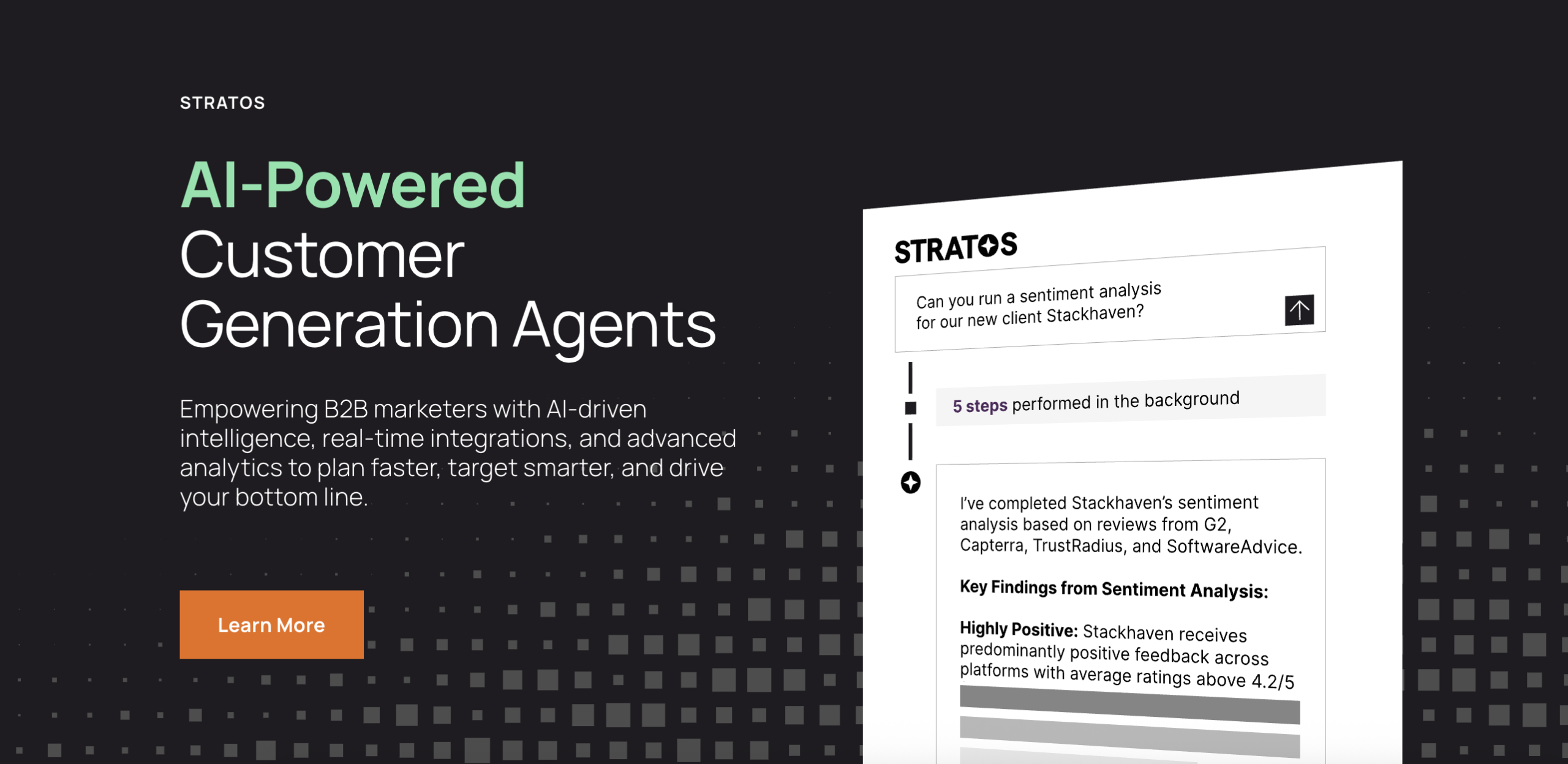
Stratos is our proprietary AI platform, built from the ground up to unify the data sources B2B marketing teams need to make confident budget decisions: CRM data, paid media performance, SEO signals, competitive intelligence, and pipeline forecasting. It is not a third-party tool we have integrated into our workflow. It is the infrastructure our strategists use every day, across every client, to plan campaigns, allocate spend, and measure what is actually driving revenue.
Every recommendation we make flows through Stratos. That means the platform is trained on 4,000+ hours of real B2B production data and informed by over $461M in channel intelligence, compounded across every account we manage. For B2B marketing leaders, the practical implication is that budget decisions are not being made from a generic dashboard. They are being made from a system calibrated specifically to the economics of B2B SaaS and technology marketing, refined continuously as more production data flows through it.
Access to Stratos is exclusive to our clients because it is not an add-on. It is how we deliver. The platform’s capabilities span the full range of budget-relevant decisions: LTV:CAC modeling that connects acquisition spend to customer lifetime value, a Paid Media Assistant that surfaces revenue allocation recommendations across channels, media mix forecasting that projects pipeline impact at different spend levels, and ICP discovery tools that identify which audience segments produce the highest-value customers. For companies that have been frustrated by the gap between what their agency reports and what the CFO actually wants to see, Stratos is built to close that gap by design.
Key Capabilities: LTV:CAC Modeling, Paid Media Intelligence, Media Mix Forecasting, ICP Discovery & Audience Analysis, Weekly Reporting Automation, Competitive Intelligence, CRM Integration
Best For: B2B companies that partner with Directive and want every budget decision backed by a proprietary AI platform built on real production data.
Why Choose Stratos:
- Exclusive to Directive and built into every deliverable, from paid media to pipeline forecasting
- LTV:CAC and media mix modeling purpose-built for B2B SaaS economics
- 4,000+ hours of AI production and $461M in channel intelligence informing every recommendation
2. HockeyStack
2. HockeyStack
The B2B attribution platform that connects every touchpoint to pipeline
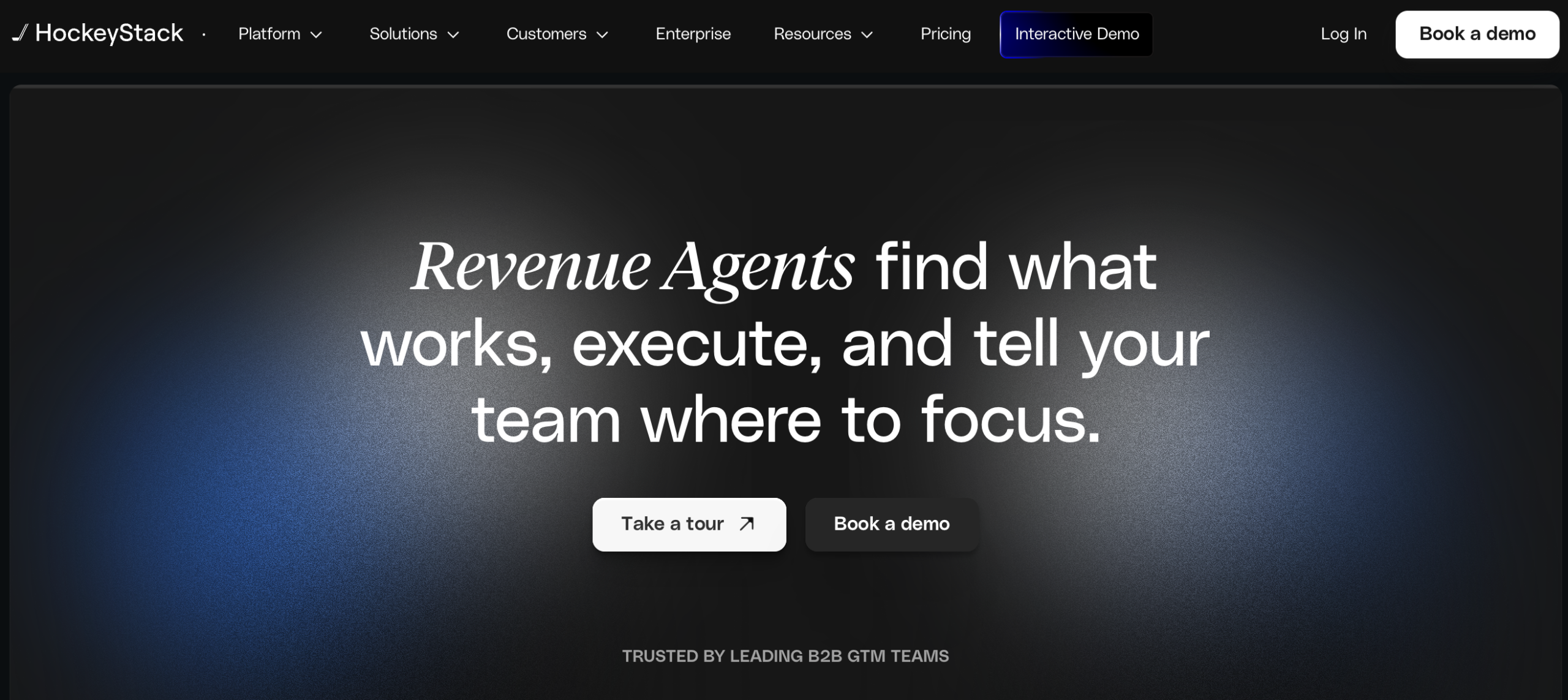
HockeyStack is a B2B analytics and attribution platform designed to answer the question most marketing teams are still struggling with: which spend is actually moving deals? The platform consolidates data from ad platforms, website behavior, and CRM into a warehouse-native system, and applies AI-driven analysis to surface which channels, campaigns, and content are influencing pipeline at each stage of the buying journey. For B2B teams managing long sales cycles and multi-stakeholder decisions, that visibility is operationally significant. It shifts the conversation from which campaigns got clicks to which campaigns got attributed to closed revenue, and it does so with the visual clarity of buyer journey mapping that makes the data accessible to people who are not data scientists. The platform’s LinkedIn impression tracking is particularly strong for B2B teams, connecting view-through data at the account level to downstream pipeline impact in a way that standard LinkedIn reporting cannot provide.
HockeyStack’s AI analyst feature allows teams to build reports, query their data, and surface insights without writing SQL or relying on an analytics team. For marketing leaders who need to move quickly from data to decision, that accessibility is a meaningful operational advantage. The platform integrates with HubSpot, Salesforce, Google Ads, LinkedIn Ads, and most major B2B marketing tools, which means it fits cleanly into existing tech stacks rather than requiring a wholesale rebuild. For B2B teams that want to make a cleaner, revenue-grounded case for every line item in their budget, HockeyStack is one of the most capable platforms in the market.
Key Capabilities: Multi-Touch Attribution, Buyer Journey Visualization, LinkedIn Impression Tracking, Account-Based Analytics, AI Report Builder, CRM Integration, Pipeline Attribution
Best For: B2B SaaS and technology teams that need to connect multichannel spend to pipeline and revenue with account-level granularity and strong CRM alignment.
Why Choose HockeyStack:
- Warehouse-native architecture consolidates campaign, website, and CRM data into a single, query-ready model
- LinkedIn account-level impression tracking connects B2B awareness spend to pipeline in a way standard reporting cannot
- AI analyst feature allows non-technical teams to build and explore attribution reports without SQL or data team support
3. 6sense
3. 6sense
The AI revenue platform that identifies in-market accounts before they engage
6sense is an AI-powered revenue platform built to solve one of the most expensive problems in B2B marketing: spending budget to reach accounts that are not yet, or may never be, in a buying cycle. The platform uses its proprietary Signalverse dataset, which aggregates intent signals from across the web, to identify accounts that are actively researching solutions like yours before they engage with your website or fill out a form. That predictive buying stage intelligence allows B2B marketing teams to concentrate budget on accounts that are actually moving toward a decision, rather than distributing spend evenly across a TAM that is largely inert at any given moment. For organizations running ABM programs or managing significant paid media budgets, the ability to prioritize spend against verified in-market demand is a genuine structural advantage.
Beyond intent identification, 6sense supports AI-driven orchestration that automates how accounts are engaged once they are identified as high-priority. Workflows can be triggered based on buying stage, firmographic fit, and engagement behavior, ensuring that the right message reaches the right account at the right moment without requiring manual intervention from a marketing ops team. The platform integrates with Salesforce, HubSpot, LinkedIn, and most major B2B marketing and sales tools. For enterprise B2B teams that want AI to inform not just which accounts to target but how much to spend pursuing them, 6sense is the market-leading solution.
Key Capabilities: Predictive Intent Data, Buying Stage AI, Account Identification, ABM Orchestration, AI-Driven Audience Building, CRM & Ad Platform Integration, Pipeline Intelligence
Best For: Enterprise B2B teams running ABM programs that want AI-powered intent data to concentrate budget on accounts with the highest probability of converting.
Why Choose 6sense:
- Signalverse dataset surfaces in-market accounts before they engage directly, enabling proactive rather than reactive budget allocation
- AI buying stage predictions reduce spend on low-probability accounts and protect budget for high-fit opportunities
- Deep integration with CRM, ad platforms, and sales workflows enables end-to-end orchestration from signal to closed deal
4. Dreamdata
4. Dreamdata
B2B attribution platform that connects every GTM touchpoint to closed revenue
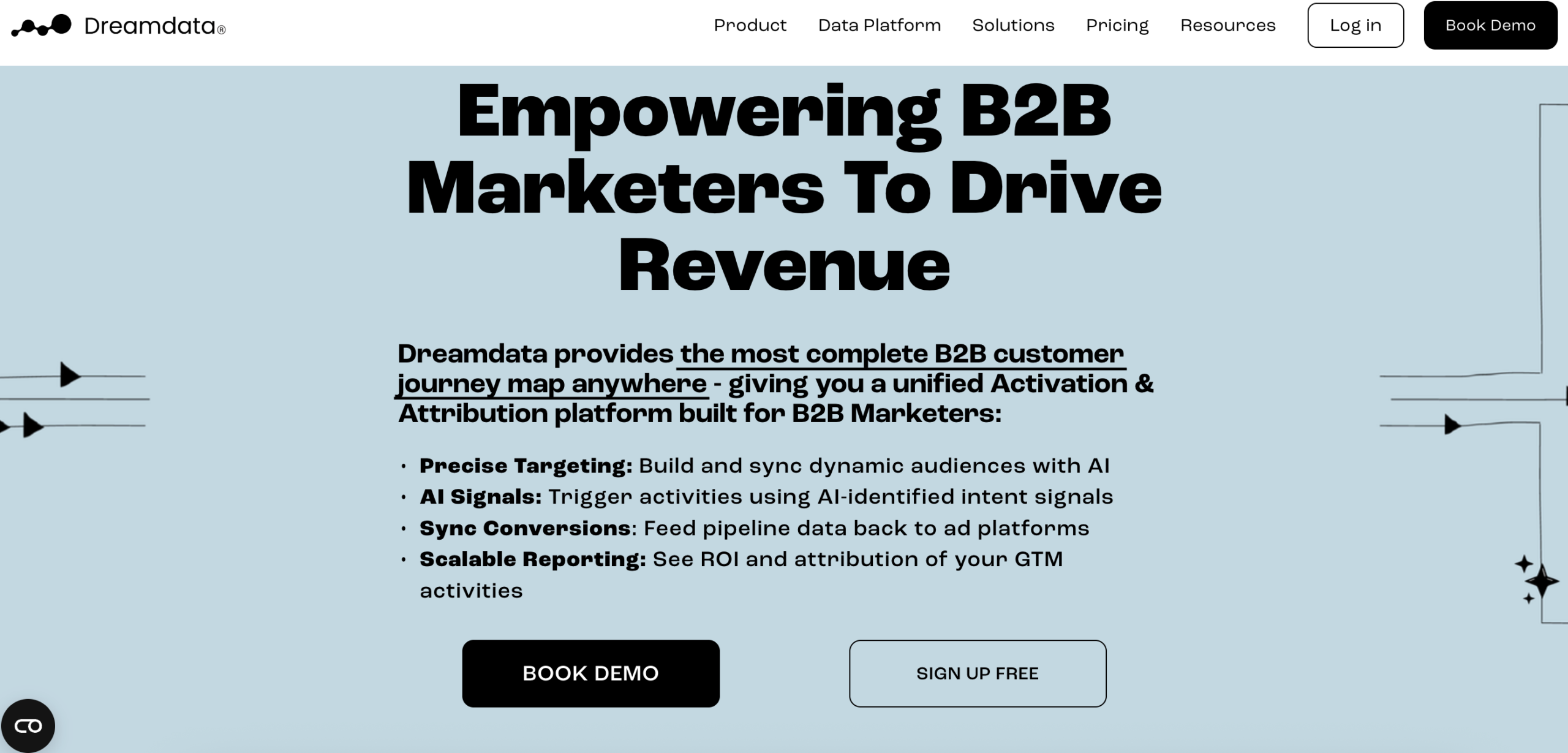
Dreamdata is a B2B revenue attribution platform that automatically collects, models, and activates the data from across a company’s full go-to-market motion, connecting website activity, advertising, email, events, and CRM data into a single, continuous customer journey view. The platform’s attribution engine supports multiple modeling approaches, including data-driven models that account for the complexity of B2B buying cycles where a single deal may involve dozens of touchpoints across 6 to 18 months. What distinguishes Dreamdata from simpler attribution tools is the depth of its customer journey visualization, which gives marketing teams a concrete, account-level view of how specific channels and campaigns influenced deals that closed, deals that stalled, and deals that were never going to convert. That granularity is what allows teams to make budget reallocation decisions with genuine confidence rather than inference.
Dreamdata’s revenue forecasting capabilities add a forward-looking dimension to the attribution picture, connecting historical performance data to pipeline projections that give marketing leaders a data-grounded basis for budget proposals. For teams that have been frustrated by the disconnect between what their marketing automation platform reports and what Salesforce shows, Dreamdata bridges that gap through clean data modeling rather than manual reconciliation. The platform is particularly well-suited for B2B companies with complex, multi-stakeholder buying journeys that standard attribution tools oversimplify into a first-touch or last-touch model.
Key Capabilities: Multi-Touch Revenue Attribution, Customer Journey Visualization, Revenue Forecasting, Content & Campaign Attribution, Account-Level Analytics, CRM & Ad Integration, ROAS & CAC Reporting
Best For: Mid-market and enterprise B2B teams with long, complex sales cycles that need auditable attribution connecting every campaign and content touchpoint to closed revenue.
Why Choose Dreamdata:
- Automatically collects and models data across the full B2B GTM motion, eliminating the manual reconciliation most teams rely on
- Customer journey visualization gives account-level clarity on which touchpoints influenced deals at every stage
- Revenue forecasting connects attribution data to forward-looking pipeline projections that support defensible budget proposals
5. Northbeam
5. Northbeam
The ML attribution platform with scenario planning for smarter spend allocation

Northbeam is an attribution and media mix modeling platform that uses machine learning to cut through the credit-claiming problem that makes multi-channel attribution so difficult in practice. Rather than relying on rules-based models that assign fixed credit to first or last touch, Northbeam’s ML engine analyzes the full weight of historical conversion data to assign fractional credit to every touchpoint in a way that reflects actual causal contribution rather than positional credit. For B2B teams spending significantly across paid search, LinkedIn, and content, that distinction changes which channels look efficient and which look like they are just capturing demand that other channels already created. The platform’s scenario planning feature is particularly valuable for budget planning: teams can model different allocation strategies, shift spend between channels, and see projected impact before a single dollar is moved.
Northbeam’s incrementality testing capabilities add a layer of causal validation that most attribution platforms do not provide. Rather than inferring contribution from modeling alone, incrementality tests reveal which spend is truly additive and which is claiming credit for conversions that would have happened regardless. For B2B marketing leaders who are tired of defending channel budgets based on platform-reported numbers that cannot be independently validated, Northbeam provides the kind of evidence that holds up in a CFO review. The platform is best suited to teams managing meaningful ad budgets across multiple channels who need both the analytical depth and the planning infrastructure to make allocation decisions with precision.
Key Capabilities: Machine Learning Multi-Touch Attribution, Media Mix Modeling, Incrementality Testing, Scenario Planning, Cross-Channel Budget Optimization, Creative-Level Analytics, Predictive Forecasting
Best For: B2B and growth-stage teams managing significant multi-channel ad spend that need ML-powered attribution and scenario planning tools to optimize allocation before committing budget.
Why Choose Northbeam:
- ML attribution engine assigns fractional credit based on actual causal contribution, not positional rules that inflate top or bottom of funnel
- Scenario planning tools model budget reallocation outcomes before spend is committed, reducing the cost of allocation mistakes
- Incrementality testing validates which spend is truly additive rather than taking credit for demand already created elsewhere
6. Factors.ai
6. Factors.ai
The unified B2B analytics platform combining attribution, intent, and account intelligence
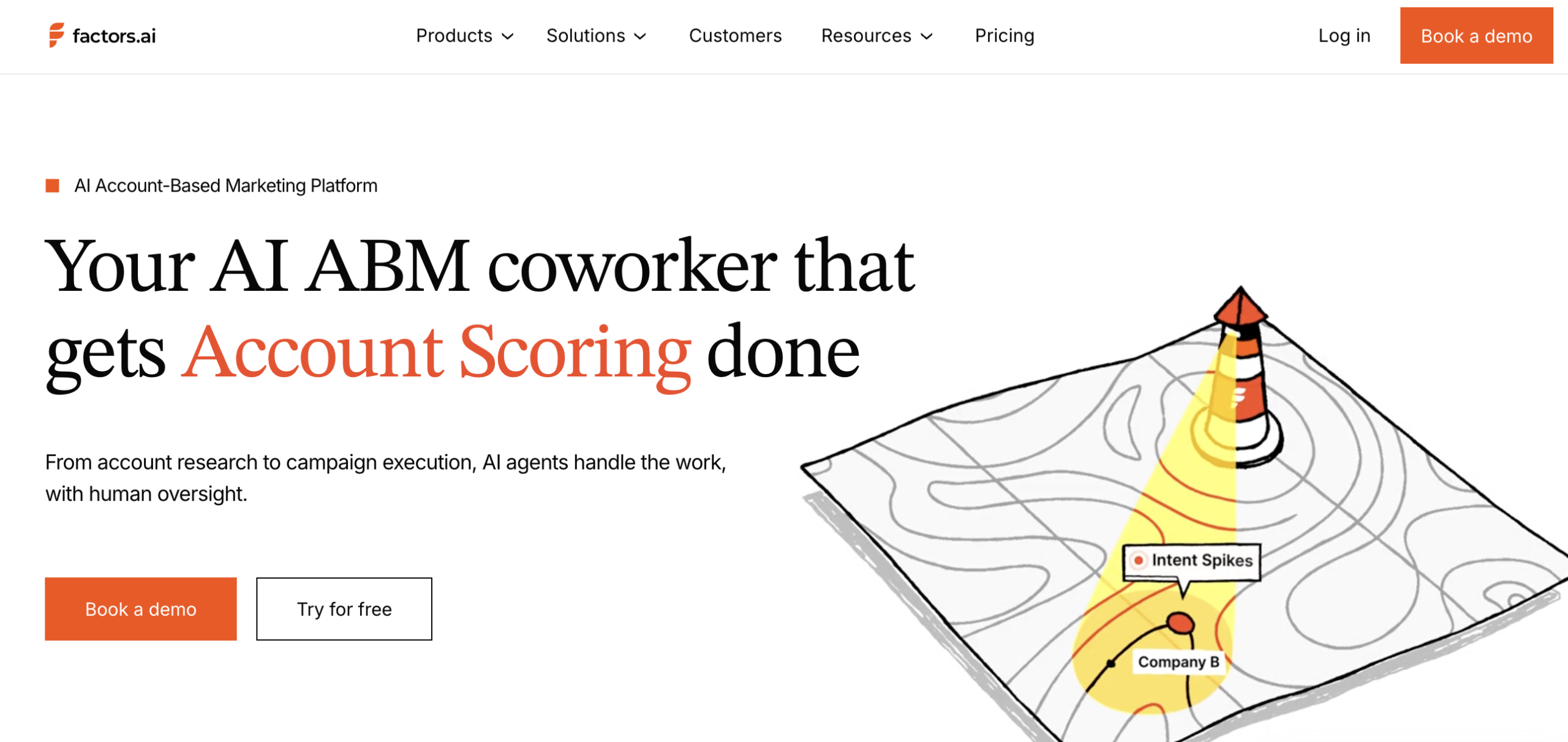
Factors.ai is a unified B2B analytics and attribution platform that combines multi-touch attribution, account identification, intent signal aggregation, and GTM workflow automation into a single system without requiring engineering resources to implement or maintain. The platform identifies anonymous companies visiting a client’s website, tracks their behavior across sessions and campaigns, and connects that activity to CRM data to give marketing teams an account-level view of the full buying journey. What makes Factors particularly useful for budget decisions is the integration of LinkedIn impression data and G2 engagement signals alongside website and CRM activity, which means teams get a more complete picture of how awareness spend is influencing accounts that have not yet converted into a known lead. For B2B teams that have been blind to the influence of top-of-funnel spend on downstream pipeline, that visibility changes what they should be funding.
Factors supports 6 built-in multi-touch attribution models, which allows teams to compare how different attribution frameworks change the revenue picture and make a more informed decision about which model best reflects the reality of their buying cycle. The platform also offers Google Ads optimization that targets only high-intent, ICP-fit accounts, allowing teams to reduce wasted spend on audiences that will never convert. At a price point that is significantly more accessible than enterprise alternatives like 6sense or HockeyStack, Factors is a strong option for B2B growth-stage companies that want account intelligence and attribution without the enterprise implementation burden.
Key Capabilities: Multi-Touch Attribution, Account Identification, LinkedIn & G2 Intent Signals, Website Visitor Intelligence, Google Ads Optimization, CRM Integration, Sales Alerts
Best For: Growth-stage B2B teams that want account-level attribution, intent signal tracking, and ICP-based ad optimization without enterprise pricing or a complex implementation.
Why Choose Factors.ai:
- Combines website analytics, LinkedIn impression data, and G2 intent signals into a single account-level view of pipeline influence
- 6 built-in attribution models allow teams to compare frameworks and choose the one that best reflects their actual buying cycle
- No-code setup and accessible pricing make it a credible option for B2B teams that want attribution depth without enterprise overhead
7. Demandbase
7. Demandbase
The enterprise ABM platform that concentrates spend on accounts most likely to close 
Demandbase is an end-to-end account-based marketing platform that combines AI-powered account intelligence, programmatic advertising, website personalization, and sales activation into a single enterprise system. Its AI predictive scoring model ranks accounts by their likelihood to convert based on historical data and real-time intent signals, giving marketing and sales teams a shared, continuously updated prioritization framework that directly informs where budget should be concentrated. For enterprise B2B teams managing large ABM programs across multiple segments and geographies, that shared prioritization layer is operationally significant. It prevents the fragmentation that occurs when marketing is funding awareness campaigns against one set of accounts while sales is pursuing a different list entirely. Demandbase’s Agentbase system of connected AI agents extends that alignment further, automating the orchestration of account engagement across marketing, sales, and RevOps in real time.
Demandbase’s native B2B DSP allows teams to serve targeted programmatic ads directly to decision makers at high-priority accounts without going through third-party networks, which improves both targeting precision and spend efficiency. The platform’s website personalization capability tailors content, messaging, and CTAs to specific accounts based on firmographic data and buying stage signals, ensuring that budget invested in driving traffic converts at a higher rate once accounts arrive. For enterprise CMOs looking to make a defensible case for ABM investment based on account-level pipeline attribution rather than impressions and reach, Demandbase provides the measurement infrastructure to support that argument.
Key Capabilities: AI Predictive Account Scoring, Programmatic Advertising (Native B2B DSP), Website Personalization, Intent Data, Agentbase AI Orchestration, Account Journey Analytics, Sales & RevOps Integration
Best For: Enterprise B2B companies running large-scale ABM programs that need AI-driven account prioritization, native programmatic advertising, and end-to-end pipeline attribution in one platform.
Why Choose Demandbase:
- AI predictive scoring creates a shared, continuously updated account prioritization framework that aligns marketing and sales budget decisions
- Native B2B DSP enables targeted programmatic spend directly to high-priority accounts without relying on third-party networks
- Agentbase AI orchestration automates cross-functional account engagement across marketing, sales, and RevOps simultaneously
8. Planful
8. Planful
The AI financial planning platform that brings marketing budgets into the CFO’s system
Planful is a financial performance management platform that uses AI to connect marketing budget planning directly to company-wide financial modeling, giving marketing leaders a planning environment that speaks the same language as the CFO’s office. Most marketing teams build their budgets in spreadsheets or in tools that are disconnected from the financial systems where the real decisions get made. Planful closes that gap by providing a structured, auditable planning environment where marketing investment scenarios can be modeled, stress-tested, and reconciled against revenue forecasts in the same system that finance uses. The platform’s Predict module uses AI to surface anomalies in spending patterns, flag variances early, and generate forward-looking forecasts that give marketing leadership more time to respond to budget pressure before it becomes a problem.
For B2B marketing organizations that have grown to the point where spreadsheet-based planning creates more risk than it solves, Planful provides the infrastructure to manage budgets with the rigor that finance expects without requiring a full FP&A buildout inside the marketing function. The platform is well-suited to mid-market and enterprise companies where the marketing budget is large enough to warrant real financial controls, and where the CMO is regularly presenting budget performance to the CFO, board, or both. Organizations that have made the shift from spreadsheet-based planning to a structured financial platform consistently report stronger budget visibility and tighter cross-functional alignment between marketing and finance.
Key Capabilities: AI-Powered Budget Forecasting, Financial Scenario Modeling, Variance Detection, Marketing Spend Analytics, Rolling Forecasts, FP&A Integration, Automated Reporting
Best For: Mid-market and enterprise B2B marketing teams that need AI-powered budget planning infrastructure that integrates with company-wide financial forecasting and withstands CFO-level scrutiny.
Why Choose Planful:
- Connects marketing budget planning directly to company-wide financial modeling, eliminating the reconciliation gap between marketing and finance
- AI anomaly detection and variance flagging give teams advance warning of budget pressure rather than discovering it at month-end
- Structured, auditable planning environment supports the level of financial rigor that boards and CFOs now expect from marketing leadership
9. Ruler Analytics
9. Ruler Analytics
The closed-loop attribution platform that passes revenue data back into your CRM
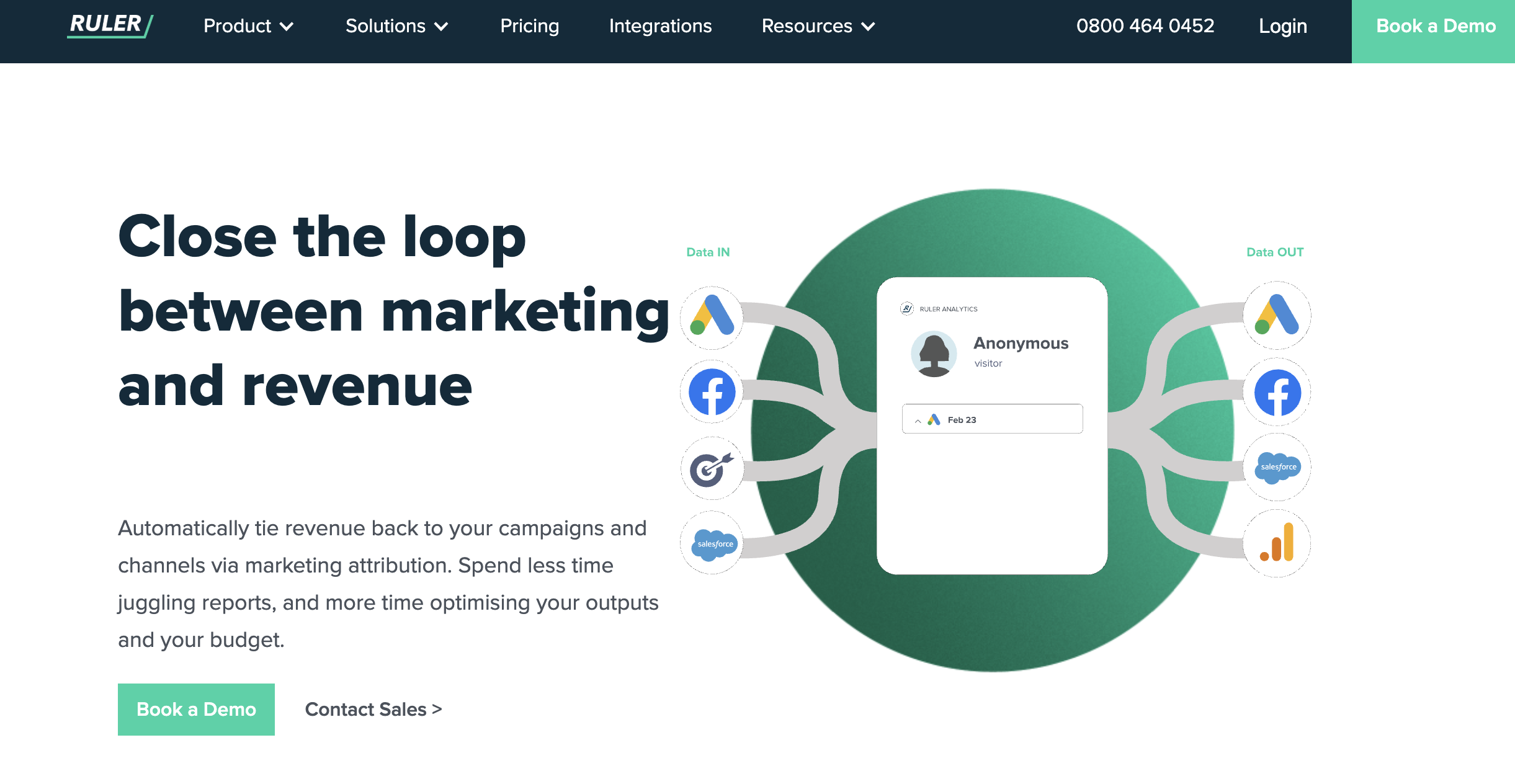
Ruler Analytics is a closed-loop marketing attribution platform that solves a specific problem most B2B attribution tools leave unresolved: connecting the visitor-level data in your analytics platform to the revenue data in your CRM. The platform tracks individual visitor journeys across multiple sessions and channels, captures the marketing touchpoints that influenced each contact, and then passes that attribution data back into Salesforce or HubSpot when a deal closes. The result is a bidirectional attribution model where every closed deal is tagged with the exact channels, campaigns, and content that influenced it, and that data is available both in the CRM and in the analytics platform simultaneously. For B2B teams that have been manually trying to reconcile lead source data with closed revenue data at the end of each quarter, Ruler automates that process entirely.
Ruler Analytics supports predictive analytics, marketing mix modeling, and both online and offline attribution, making it a strong fit for B2B companies that run a mix of digital campaigns, events, and direct sales activity. The visitor-level tracking approach means teams can see the full journey of an individual account from first anonymous session through multiple return visits to the point of conversion, which gives a more accurate picture of attribution than session-level or aggregate-level models. At a price point accessible to growth-stage companies, Ruler Analytics delivers closed-loop attribution with a depth of CRM integration that typically requires enterprise tooling to achieve.
Key Capabilities: Closed-Loop Revenue Attribution, Visitor-Level Journey Tracking, CRM Revenue Passback, Predictive Analytics, Marketing Mix Modeling, Offline & Online Attribution, Multi-Touch Attribution
Best For: B2B teams that want visitor-level, closed-loop attribution that connects marketing touchpoints directly to CRM revenue data without manual reconciliation.
Why Choose Ruler Analytics:
- Closed-loop model passes attribution data back into Salesforce or HubSpot when deals close, eliminating manual reconciliation between analytics and CRM
- Visitor-level tracking captures the full multi-session journey of individual accounts, not just aggregate channel performance
- Offline attribution support makes it one of the few tools that accounts for events, calls, and direct sales activity alongside digital spend
10. Funnel.io
10. Funnel.io
Marketing data hub that turns fragmented channel data into one reliable source of truth
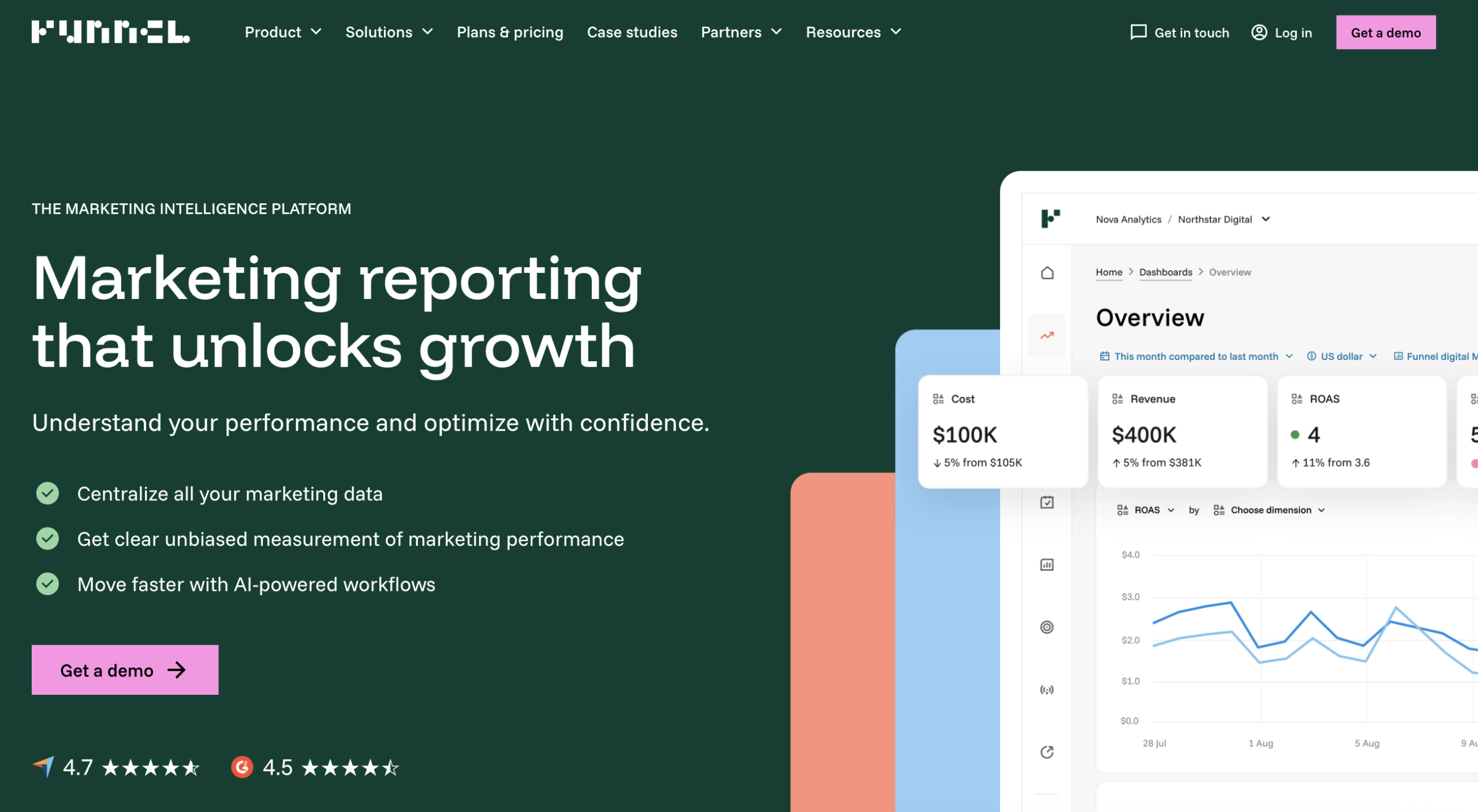
Funnel.io is a marketing data hub that solves the infrastructure problem that makes accurate budget analysis difficult in the first place: data that lives in too many places, in too many formats, with too many naming inconsistencies to be reliably combined for analysis. The platform connects to hundreds of ad platforms, CRMs, analytics tools, and marketing automation systems, standardizes the data into a consistent schema, and routes it to wherever the team needs it, whether that is a BI tool like Looker or Tableau, a data warehouse, or a pre-built Funnel dashboard. For B2B marketing teams managing spend across LinkedIn, Google, programmatic, content, and events simultaneously, the ability to see all of that data in one reliable, up-to-date view is foundational to any serious budget analysis. Without it, the numbers in every planning conversation are slightly different depending on which platform someone pulled them from.
Funnel’s AI-assisted mapping and normalization tools reduce the manual work of keeping multi-source data clean as campaigns are added, renamed, or restructured, which means the data layer stays reliable without requiring constant maintenance from a marketing ops or data team. The platform is not an attribution tool, and it does not make budget recommendations on its own. It is the infrastructure layer that makes every other tool on this list more accurate and more trustworthy. For B2B organizations that have invested in analytics and attribution capabilities but are still struggling with data quality as the root cause of unreliable reporting, Funnel is the most direct solution to that specific problem.
Key Capabilities: Multi-Source Data Aggregation, AI-Assisted Data Normalization, BI & Data Warehouse Integration, Pre-Built Marketing Dashboards, Automated Data Pipelines, Cross-Channel Spend Reporting
Best For: B2B marketing teams managing spend across many channels and platforms that need a reliable, normalized data layer to power accurate attribution, reporting, and budget analysis.
Why Choose Funnel.io:
- Connects to hundreds of ad platforms and marketing tools, standardizing data into a consistent schema that eliminates source-level discrepancies
- AI-assisted normalization keeps the data layer clean as campaigns evolve, without requiring constant manual maintenance from a data or ops team
- Works as the data infrastructure layer that improves the accuracy and reliability of every attribution and analytics tool built on top of it
11. Wynter
11. Wynter
B2B message testing platform that validates creative before budget is committed
Wynter is a B2B message testing platform that addresses a budget problem that most attribution and analytics tools cannot see: spend being wasted on campaigns where the creative and messaging are fundamentally misaligned with what target buyers actually care about. The platform gives B2B marketers access to panels of verified professionals matching specific ICP criteria and uses AI-assisted analysis to surface how target buyers respond to messaging, landing pages, and positioning before campaigns go live. Rather than learning that a message did not resonate by watching conversion rates underperform over several weeks, teams using Wynter can identify and fix the messaging problem before the spend begins. For B2B companies where the cost of running an underperforming paid campaign across LinkedIn and Google for a month can run into six figures, that front-loaded validation changes the economics of campaign planning significantly.
Wynter’s research panels are segmented by job title, seniority, company size, and industry, which means the feedback teams receive is coming from people who actually match the buying profile they are trying to reach, not a general consumer research pool. The AI-assisted analysis synthesizes open-ended feedback into structured insights that identify specific objections, confusion points, and resonance gaps across different segments. For product marketing and demand generation teams working together to align messaging with media spend, Wynter provides a research layer that makes budget decisions more defensible before any spend is committed.
Key Capabilities: B2B Message Testing, ICP-Matched Research Panels, Landing Page Testing, Positioning Validation, AI-Assisted Feedback Analysis, Messaging Gap Identification, Copy & CTA Testing
Best For: B2B marketing teams that want to validate messaging and creative with verified ICP-matched buyers before committing budget to amplify campaigns at scale.
Why Choose Wynter:
- ICP-matched research panels deliver feedback from verified professionals that match the exact buying profile, not general consumer research respondents
- Front-loads messaging validation before spend is committed, reducing the cost of discovering creative misalignment through live campaign underperformance
- AI-assisted feedback analysis synthesizes open-ended buyer responses into structured insights that identify specific objections and resonance gaps by segment
What to Consider When Evaluating AI Budget Tools for B2B
What to Consider When Evaluating AI Budget Tools for B2B
The first question is not which platform is most sophisticated. It is where in your decision chain the most expensive failure is occurring, because the right tool depends entirely on which problem you are actually trying to solve.
If budget is being committed to channels based on attribution models that overcount every touchpoint and cannot distinguish incremental contribution from coincidental credit, the problem is measurement. If budget is being spread across a broad TAM when only a fraction of those accounts are in an active buying cycle, the problem is targeting, and no attribution tool fixes that. If your reporting infrastructure produces different numbers depending on which platform someone pulled from, the problem is data quality, and layering analytics on top of fragmented inputs produces confident-looking outputs that are wrong.
Sequence matters here more than platform selection. A sophisticated attribution model fed by unreliable, inconsistently tagged data will generate precise-looking numbers that misrepresent reality. Intent data is only as useful as the ICP framework it is being filtered through. Forecasting tools are only as credible as the historical data informing the model. The organizations that get the most from this category invest in the data foundation first and build analytical capability on top of it, rather than buying the most advanced tool and hoping the ROI reveals itself. Identify the failure, fix the foundation, then select the platform that addresses the specific gap.
Budget Intelligence Is Now a Competitive Advantage
Budget Intelligence Is Now a Competitive Advantage
The gap between B2B marketing teams that have built data infrastructure for budget decisions and those that are still relying on platform-reported metrics and quarterly spreadsheets is widening. It is not a gap in spending. It is a gap in the quality of information informing each decision. Teams with real attribution infrastructure, account intelligence, and forecasting capabilities are making allocation adjustments in weeks that would take their competitors quarters to identify. They are defunding channels that look productive in last-touch models but contribute nothing to closed revenue. They are concentrating spend on accounts that the data identifies as in-market rather than accounts that match a firmographic profile someone built two years ago.
That compounding advantage is the real argument for investing in this category. Not that any single platform will transform marketing performance overnight, but that each improvement in data quality raises the ceiling on every subsequent decision. For B2B marketing leaders who are responsible for both the number and the narrative behind it, the difference between winning and losing that conversation is almost always the quality of the data they walked in with.