






Why Your Retention Stack Needs an Upgrade
Why Your Retention Stack Needs an Upgrade
If you’re still managing your retention engine with a manually updated Google Sheet, you’re not losing time, you’re also actively hemorrhaging revenue. In B2B, a loyalty program is not a “limited-time offer” or a B2C-style punch card but rather a mission-critical system for influence across complex sales channels, from resellers to enterprise accounts.
Choosing the right software means flipping your relationship nurture and retention strategies from reactive to proactive, and compounding growth. This is a list of platforms that handle B2B complexity and move the needle on driving Net Revenue Retention (NRR) and Lifetime Value (LTV) by solving B2B-specific problems like complex channel incentives and account-level visibility. This separates the enterprise-grade tools from the points-and-prizes software.
TL;DR — Best B2B Loyalty Program Software Platforms
TL;DR — Best B2B Loyalty Program Software Platforms
- Open Loyalty: Best for enterprise teams needing a fully customizable, developer-friendly loyalty infrastructure.
- Maritz: Best for large-scale manufacturers with global distributor networks.
- Brandmovers: Best for global B2B brands looking for a mix of software and managed services.
- Apex Loyalty: Best for B2B companies already heavily invested in the Salesforce ecosystem.
- Salesforce Loyalty Management: Best for large enterprises that want their loyalty program to be an extension of their core CRM.
Category 1: Revenue-Grade B2B Loyalty & Channel Incentive Platforms
Category 1: Revenue-Grade B2B Loyalty & Channel Incentive Platforms
These platforms are built to influence post-sale revenue behavior across complex, multi-stakeholder ecosystems. They are not just “loyalty tools”, they are infrastructure for driving sell-through, partner activation, certification completion, upsell motions, and long-term account expansion.
1. Open Loyalty
1. Open Loyalty
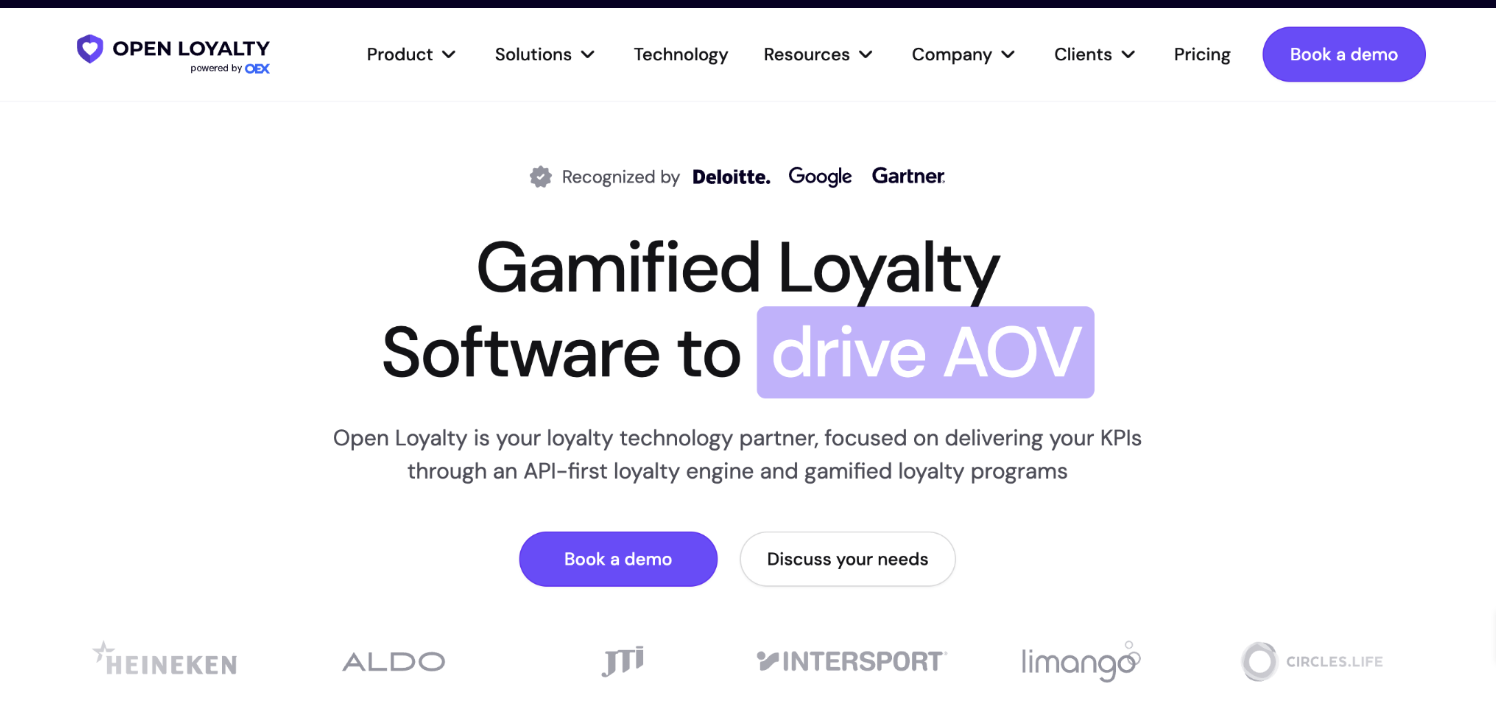
Open Loyalty is a headless, API-first loyalty platform designed for total flexibility. It allows you to build a loyalty engine that fits exactly into your existing B2B portal or application without being forced into a rigid UI.
- Best For: Enterprise teams needing a fully customizable, developer-friendly loyalty infrastructure.
- Standout Features: Flexible rules engine, multi-tenant support for different business units, and high-scale API architecture.
- Tradeoff: Requires strong internal engineering resources—this is infrastructure, not a plug-and-play solution.
2. Maritz
2. Maritz
Maritz combines a powerful B2B platform with decades of incentive design expertise. They excel at channel loyalty, specifically for manufacturers and distributors who need to influence complex middleman behavior.
- Best For: Large-scale manufacturers with global distributor networks.
- Standout Features: Behavioral science-backed incentive design, global rewards infrastructure, and enterprise-grade program governance.
3. Brandmovers
3. Brandmovers
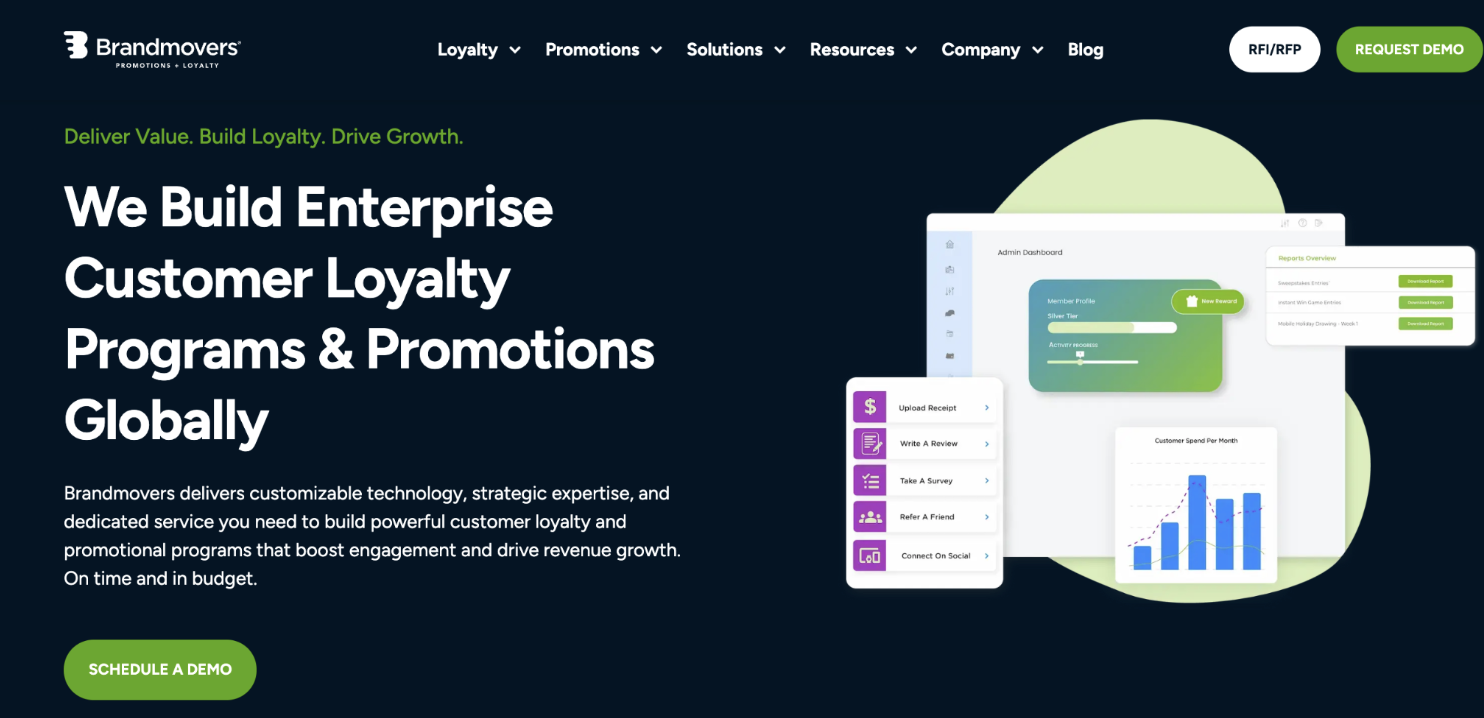
Brandmovers specializes in global B2B incentive and loyalty programs, offering both the technology and the strategic services to run them. Their platform is particularly strong at managing complex promotions across different regions.
- Best For: Global B2B brands looking for a mix of software and managed services.
- Standout Features: Strong promotional campaign execution layer, especially for rebate-driven and claim-based incentive programs across regions.
4. Apex Loyalty
4. Apex Loyalty
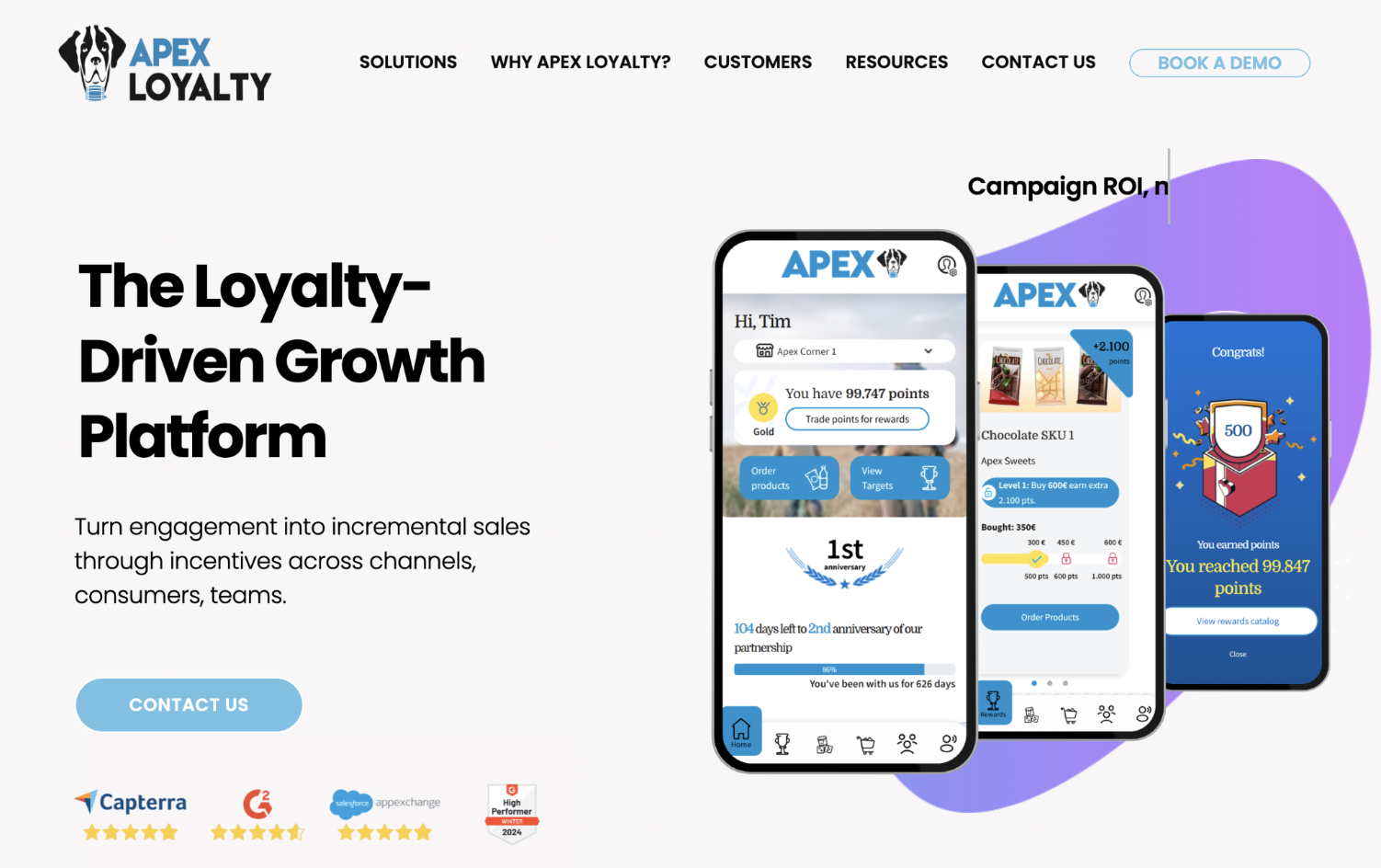
Apex Loyalty is a B2B-native platform that integrates deeply with Salesforce to provide a unified view of the customer and partner journey. It focuses on turning channel relationships into measurable revenue growth.
- Best For: B2B companies already heavily invested in the Salesforce ecosystem.
- Standout Features: Native Salesforce integration, real-time incentive tracking, and easy-to-use admin tools for non-technical users.
- Tradeoff: Best leveraged when Salesforce is the single source of truth—less flexible in multi-CRM or fragmented data environments.
5. Salesforce Loyalty Management
5. Salesforce Loyalty Management
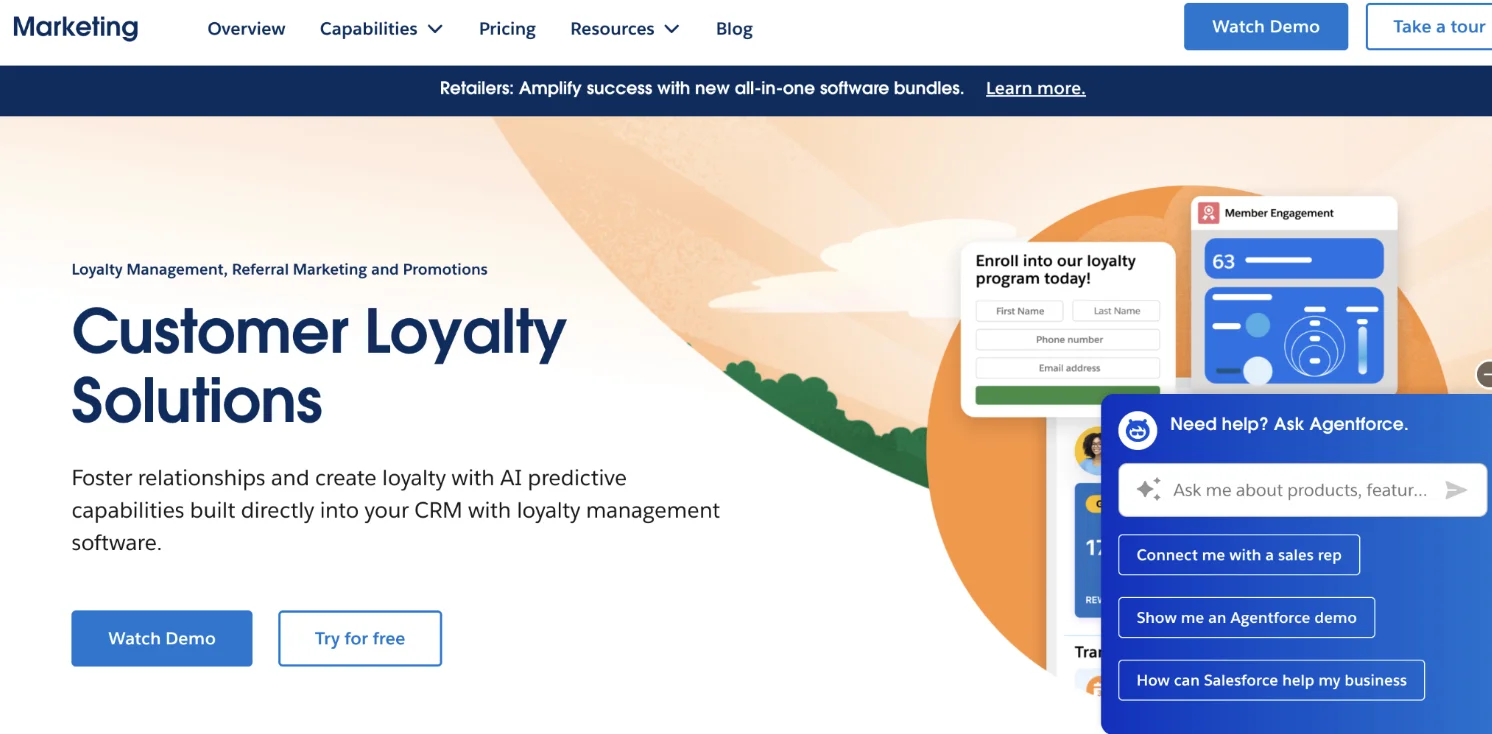
As part of the Customer 360 suite, Salesforce’s own loyalty tool is built for the enterprise. It’s highly scalable and allows you to create global loyalty programs that connect directly to your Service and Sales clouds.
- Best For: Large enterprises that want their loyalty program to be an extension of their core CRM.
- Standout Features: Automated member lifecycle management, seamless integration with Marketing Cloud, and robust analytics through Tableau.
- Tradeoff: High implementation complexity and cost—best suited for organizations already deeply embedded in the Salesforce ecosystem.
6. Antavo
6. Antavo
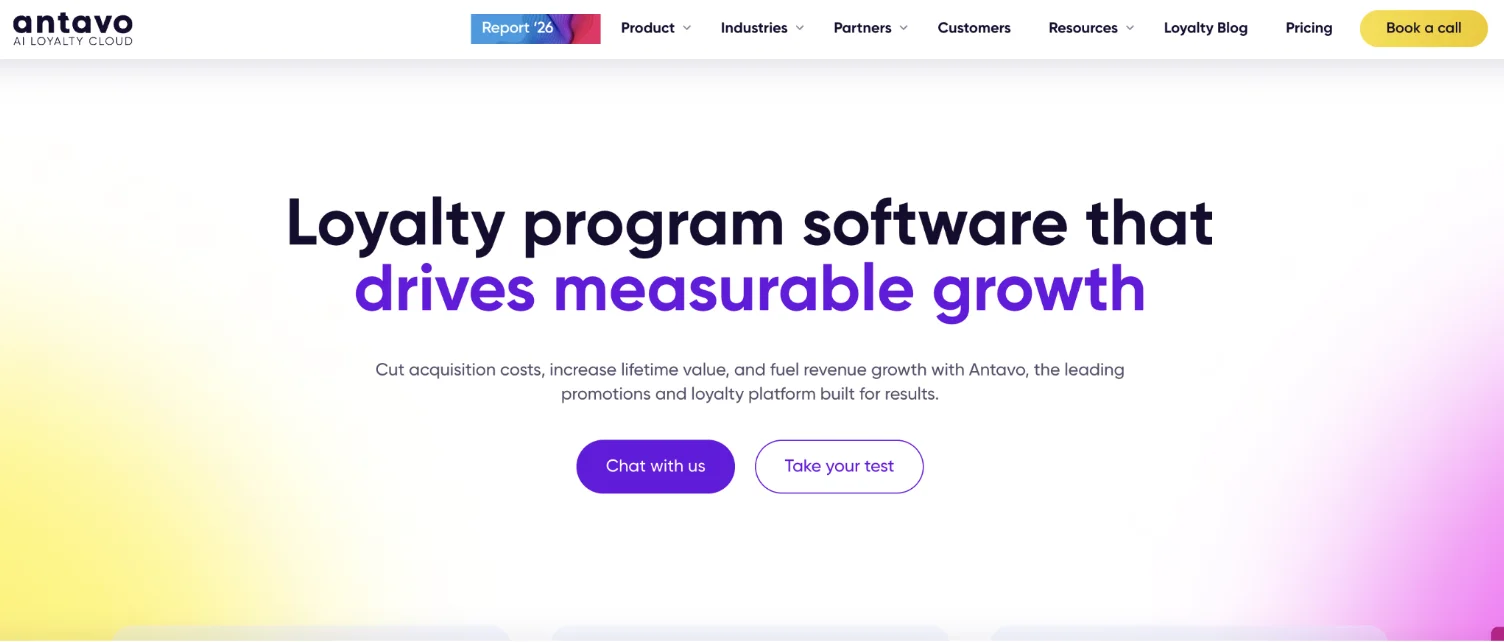
Antavo is a “next-gen” loyalty cloud that provides a tech-heavy solution for enterprises. They focus heavily on “Logic-based loyalty,” where rewards are triggered by specific business events (like a contract renewal or a product training completion).
- Best For: Brands that want to gamify the professional relationship.
- Standout Features: Event-based loyalty triggers (e.g., certifications, renewals), gamification mechanics, and non-transactional engagement models.
7. Annex Cloud
7. Annex Cloud
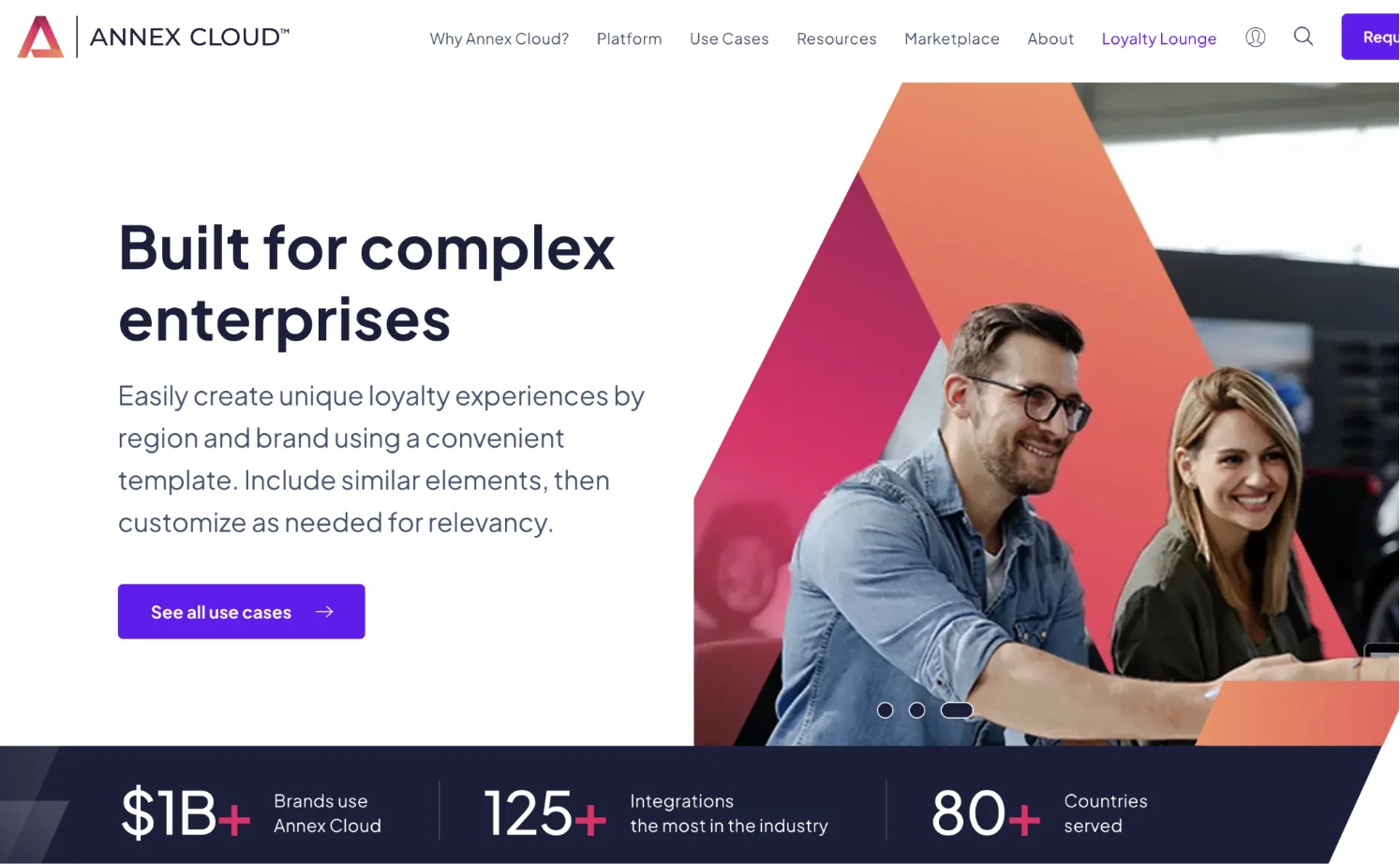
Annex Cloud provides an integrated suite of loyalty, referral, and user-generated content tools. They specialize in B2B manufacturing and distribution, where tracking the “end-user” vs. the “buyer” is often difficult.
- Best For: Manufacturers wanting to bridge the gap between distributors and end-users.
- Standout Features: Referral marketing modules, social commerce integration, and strong B2B-specific reporting. Particularly effective in environments where the buyer and end-user are disconnected and require separate engagement strategies.
8. Talon.One
8. Talon.One
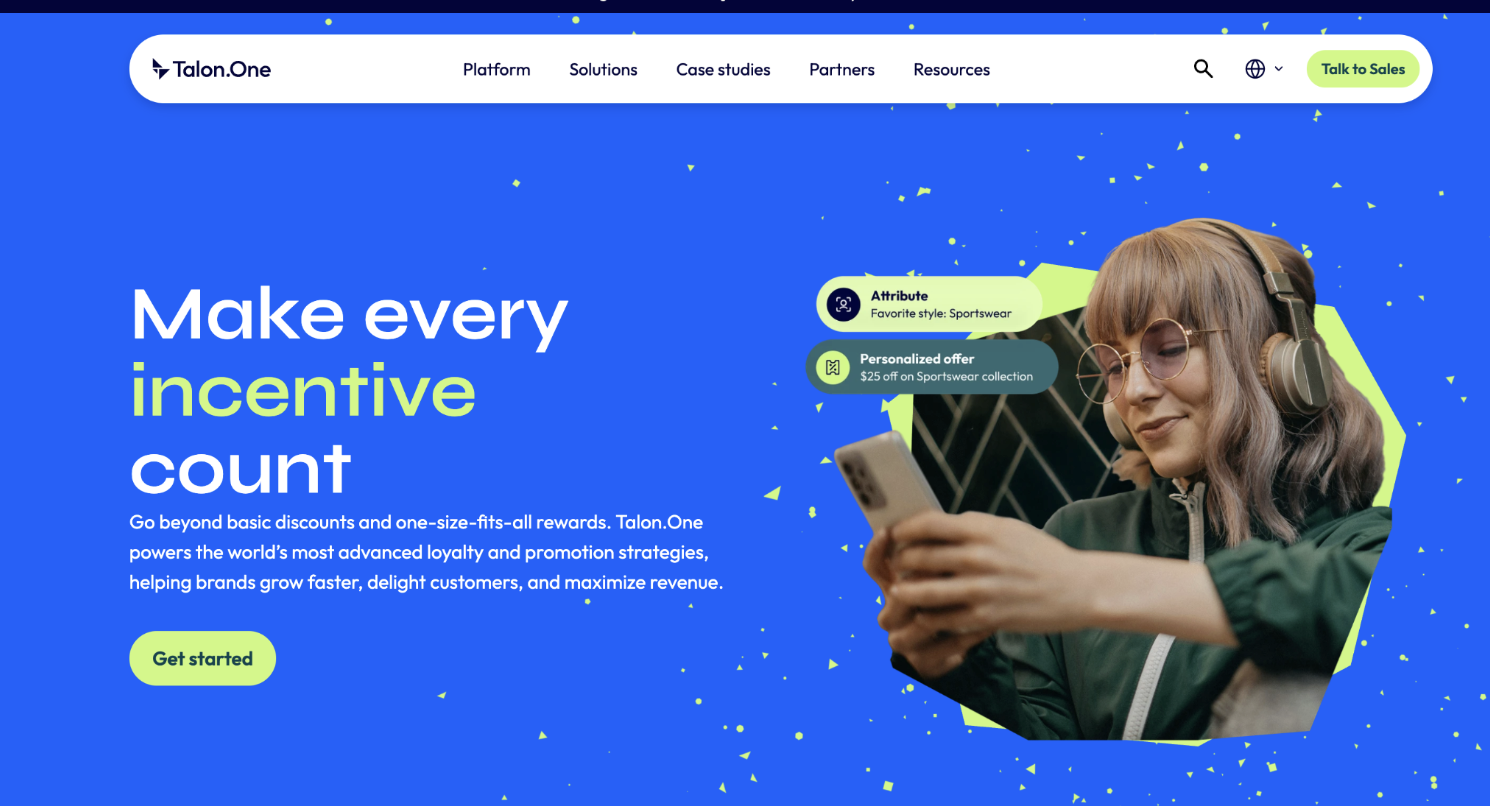
Talon.One is a powerful promotion engine that allows you to create highly targeted discounts, coupons, and loyalty features. It’s built for developers but designed for marketers to control the rules.
- Best For: Tech-forward companies that want to run complex, conditional promotions at scale.
- Standout Features: Geofencing, real-time session tracking, and a highly flexible “Rule Builder” for infinite incentive variations.
- Tradeoff: No out-of-the-box loyalty program—requires orchestration with CRM/CDP layers.
9. CustomerGauge
9. CustomerGauge
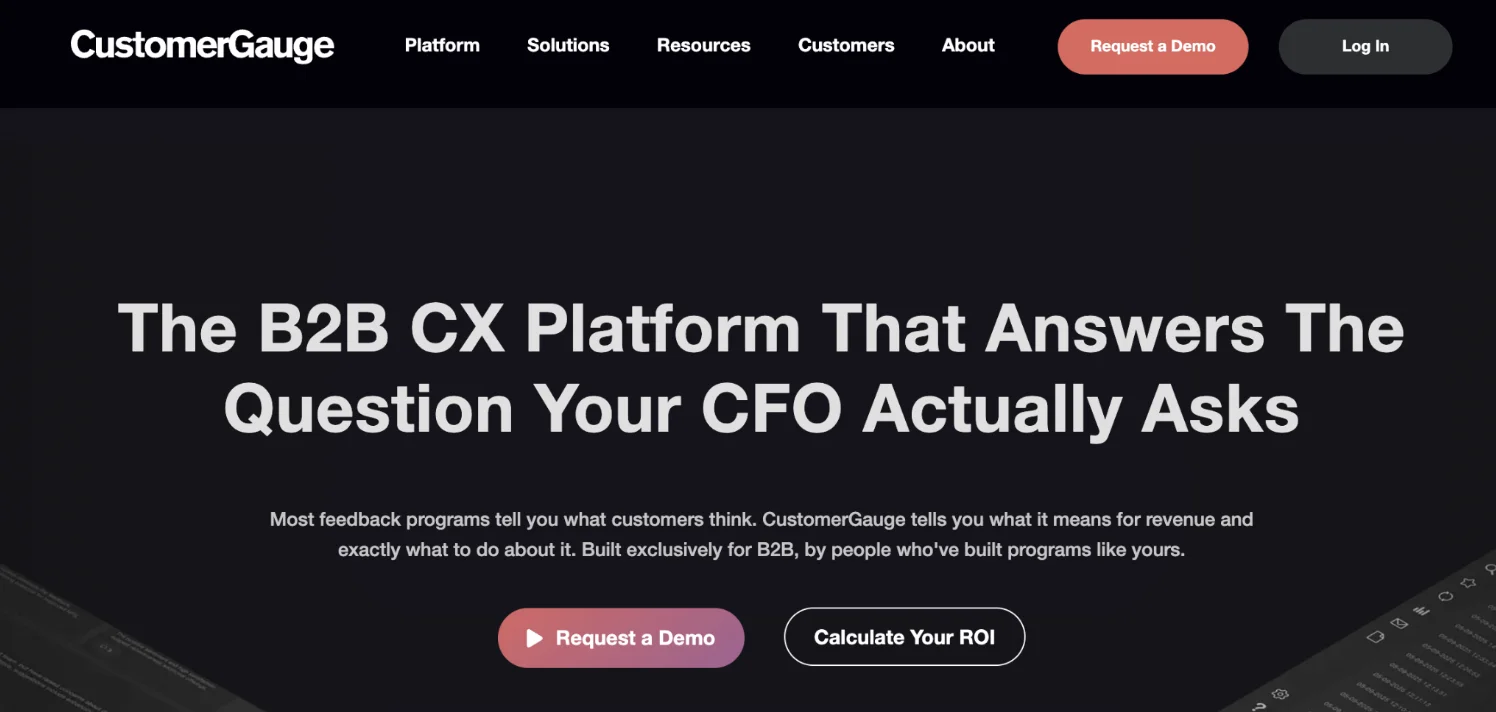
CustomerGauge isn’t a traditional “points” platform; it’s a “Retention Management” system. It links NPS (Net Promoter Score) directly to revenue, helping B2B companies identify which loyal customers are actually contributing to growth.
- Best For: B2B companies focused on Account Experience (AX) and reducing churn through feedback.
Standout Features: Revenue-at-risk dashboards, automated closing-the-loop workflows, and deep NPS analytics.
Category 2: Dedicated Partner Relationship & Enablement Stacks
Category 2: Dedicated Partner Relationship & Enablement Stacks
If your strategy is heavily reliant on a channel ecosystem (resellers, agencies, affiliates), you need purpose-built Partner Relationship Management (PRM) that bakes loyalty and enablement into the core workflow. Stop trying to shoehorn a partner program into a CRM.
10. Kademi
10. Kademi
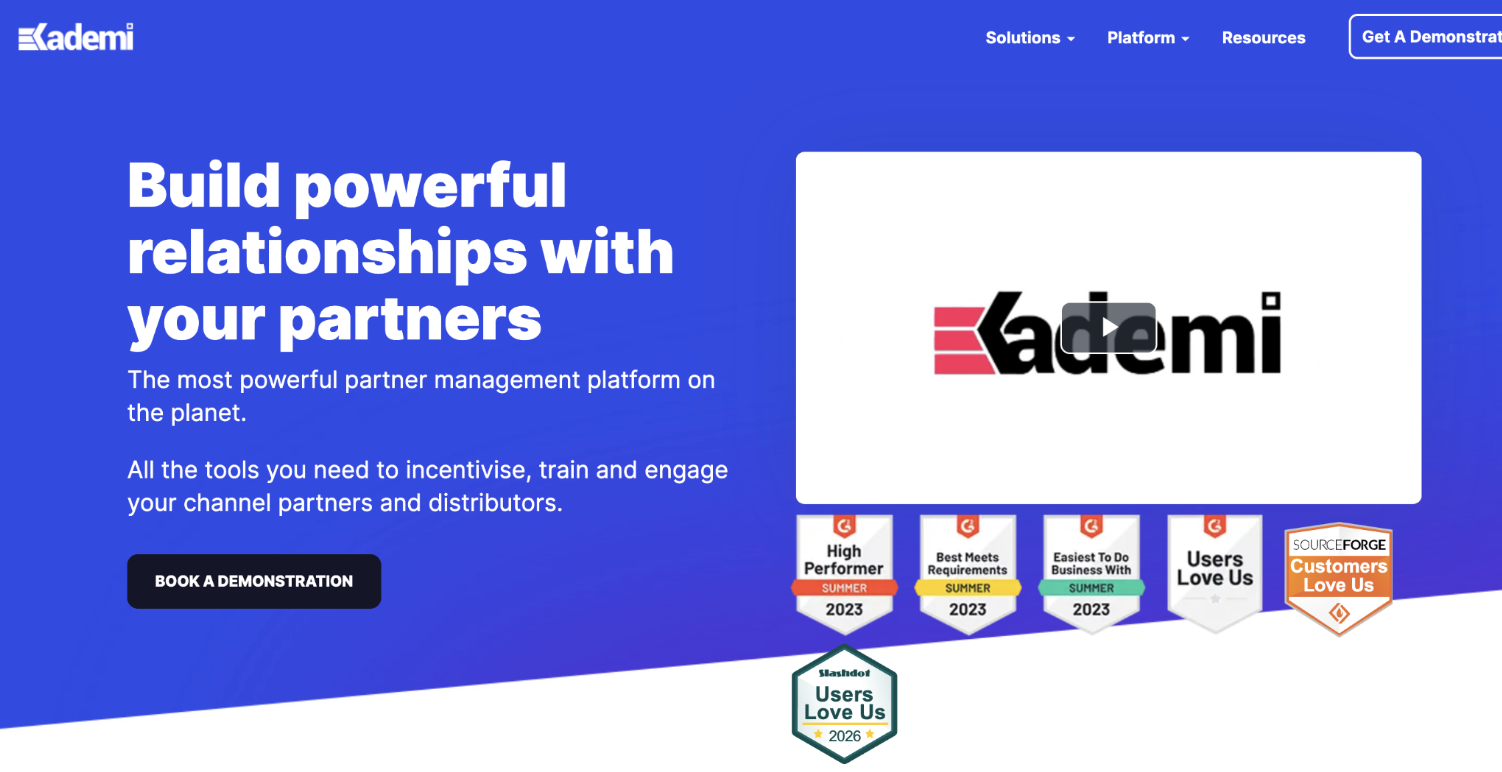
Kademi is an all-in-one partner engagement platform that brings loyalty, training, and through-channel marketing under one roof. It’s built to make the partner experience seamless from onboarding to advocacy.
- Best For: Mid-market to enterprise tech and industrial brands focusing on partner enablement.
- Standout Features: Combines enablement, incentives, and through-channel marketing into a single partner lifecycle platform, including integrated LMS and customizable portals.
11. PartnerStack
11. PartnerStack
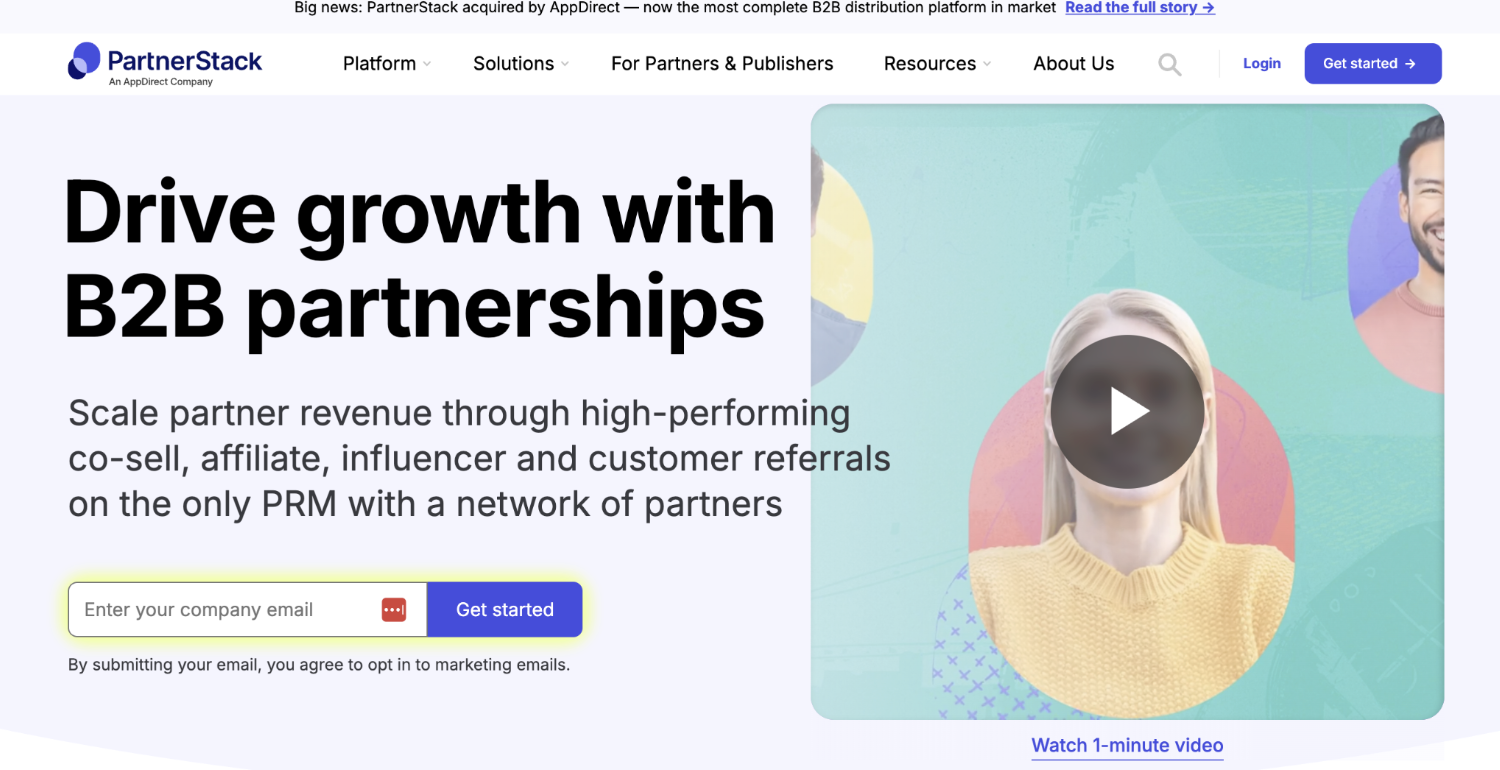
While primarily a PRM (Partner Relationship Management) tool, PartnerStack is the gold standard for B2B SaaS companies running referral and affiliate programs. It automates the entire payout and tracking process.
- Best For: SaaS companies scaling through agency partners and affiliates.
- Standout Features: Automated commission payouts, partner marketplace, and built-in compliance tracking.
- Tradeoff: Best suited for SaaS and digital partner ecosystems—not ideal for complex offline channel distribution models.
Category 3: Omnichannel & Hybrid Tools: When B2B Meets Complex Data
Category 3: Omnichannel & Hybrid Tools: When B2B Meets Complex Data
Sometimes a B2B product has a massive digital footprint—a ton of end-user data, e-commerce transactions, and high-volume interactions. These hybrid tools are powerful data vacuums that can profile accounts better than traditional loyalty-only platforms. Use them for deep data, not just simple points.
12. Oracle CrowdTwist
12. Oracle CrowdTwist
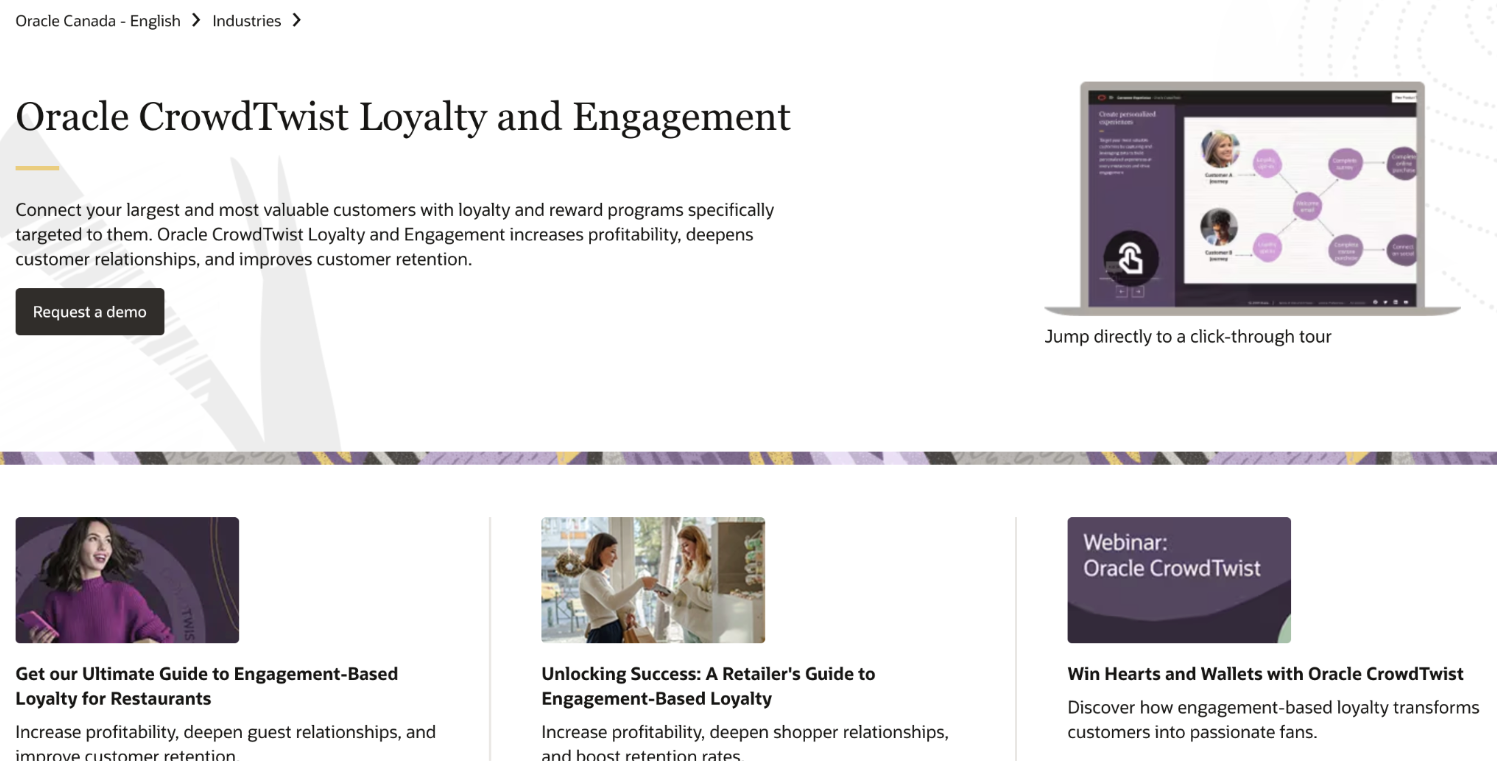
CrowdTwist offers a flexible, SaaS-based loyalty solution that focuses on omnichannel engagement. While often used in B2C, its ability to capture data across every touchpoint makes it powerful for B2B brands with complex digital footprints.
- Best For: Companies with high-volume digital interactions who need deep data profiles on their users.
- Standout Features: 100+ engagement out-of-the-box activities, advanced segmentation, and AI-driven predictive insights.
- Tradeoff: Requires significant data infrastructure maturity to fully leverage its capabilities.
13. TrueLoyal (Formerly Zinrelo)
13. TrueLoyal (Formerly Zinrelo)
Zinrelo (now TrueLoyal) is a modern loyalty platform that uses data sciences to optimize program performance. They focus on “360-degree loyalty,” rewarding customers for everything from purchases to reviews and social advocacy.
- Best For: Mid-market B2B companies looking for a data-driven approach to retention.
- Standout Features: Predictive analytics for churn and LTV, flexible tiered loyalty structures, and faster deployment compared to enterprise-heavy platforms.
How Do These B2B Loyalty Platforms Compare?
How Do These B2B Loyalty Platforms Compare?
When you’re shortlisting, the “feature volume” is a distraction. You need to look at fit.
More specifically: you are selecting infrastructure for post-sale revenue expansion, not just engagement tooling.
| Platform | Best For | Core Capability | Deployment Style | Pricing Model |
|---|---|---|---|---|
| Category 1: Revenue-Grade B2B Loyalty & Channel Incentive Platforms | ||||
| Open Loyalty | Enterprise teams needing a fully customizable, developer-friendly loyalty infrastructure. | API-first / Headless loyalty platform. | Requires strong internal engineering resources. This is infrastructure, not a plug-and-play program. | Custom/Enterprise Quote |
| Maritz | Large-scale manufacturers with global distributor networks. | Global Channel Incentives / Incentive Design Expertise. | Full-Service Platform / Robust Channel Analytics. | Custom/Enterprise Quote |
| Brandmovers | Global B2B brands looking for a mix of software and managed services. | Global B2B incentive and loyalty programs. | Software and Strategic Services. | Custom/Enterprise Quote |
| Apex Loyalty | B2B companies already heavily invested in the Salesforce ecosystem. | Salesforce-integrated B2B-native platform. | Native Salesforce Integration. | Custom/Enterprise Quote |
| Salesforce Loyalty Management | Large enterprises that want their loyalty program to be an extension of their core CRM. | Enterprise Loyalty / Customer 360 suite. | CRM Extension / Scalable Enterprise Suite. | Custom/Enterprise Quote |
| Antavo | Brands that want to gamify the professional relationship. | Logic-based loyalty / Gamification. | No-code loyalty engine / Loyalty Cloud. | Custom/Enterprise Quote |
| Annex Cloud | Manufacturers wanting to bridge the gap between distributors and end-users. | Integrated suite of loyalty, referral, and UGC tools. | Integrated Suite / B2B-specific Reporting. | Custom/Enterprise Quote |
| Talon.One | Tech-forward companies that want to run complex, conditional promotions at scale. | Promotion engine / Highly targeted incentives. | Flexible Rule Builder / API. | Custom/Enterprise Quote |
| CustomerGauge | B2B companies focused on Account Experience (AX) and reducing churn through feedback. | Retention Management / Revenue-linked NPS. | Feedback & NPS / AX System. | Custom/Enterprise Quote |
| Category 2: Dedicated Partner Relationship & Enablement Stacks | ||||
| Kademi | Mid-market to enterprise tech and industrial brands focusing on partner enablement. | Partner engagement platform (loyalty, training, marketing). | Integrated LMS / Customizable Portals. | Custom/Enterprise Quote |
| PartnerStack | SaaS companies scaling through agency partners and affiliates. | Referral and Affiliate Management / PRM. | Native SaaS UI / Automated Payouts. | Custom/Tiered |
| Category 3: Omnichannel & Hybrid Tools | ||||
| Oracle CrowdTwist | Companies with high-volume digital interactions who need deep data profiles on their users. | Omnichannel engagement / Deep data profiles. | SaaS-based solution / Advanced Segmentation. | Custom/Enterprise Quote |
| True Loyal (Zinrelo) | Mid-market B2B companies looking for a data-driven approach to retention. | 360-degree loyalty / Data sciences optimization. | Machine learning-based / Easy-to-deploy widgets. | Custom/Tiered |
What Buyers Should Look For in B2B Loyalty Software
What Buyers Should Look For in B2B Loyalty Software
In B2B, loyalty software is not a marketing tool. It’s a revenue operations system that influences retention, expansion, and partner behavior across the customer lifecycle.
Core capabilities every B2B loyalty platform should have
- Account-Level Logic & Multi-Stakeholder Tracking: B2B loyalty isn’t individual, it’s organizational. Your system must aggregate behaviors across various stakeholders to provide a unified account health score and trigger expansion opportunities. This should include role-based activity weighting (e.g., economic buyer vs. product user vs. admin) to avoid distorted engagement signals.
- Configurable Incentive & Reward Management: Marketing teams should never be bottlenecked by development. You need a robust, no-code rules engine that allows you to pivot rebate structures, gamified milestones, and professional development rewards in real-time. The key test is, can non-technical users launch or modify incentive logic without engineering intervention or deployment cycles?
Where complexity starts to matter
- Enterprise Ecosystem Integrations (CRM & ERP): If your loyalty logic is disconnected from your order history and procurement cycles, it’s a data silo. Seamless integration with CRM and ERP systems ensures rewards are tied to actual contract values and SKU-level performance. At minimum, the platform should support bidirectional sync, not just CRM visibility, but operational write-back into sales and finance systems.
- Advanced Segmentation for Partners & Customers: Not all accounts are equal. The software must allow for surgical segmentation based on tier, region, or partner type to deliver personalized incentives that move the needle on specific NRR targets. The strongest platforms also support behavioral segmentation (usage, adoption depth, engagement velocity), not just static firmographics.
- Revenue Analytics & Reporting Clarity: Vanity metrics like “points issued” are useless. Your stack must provide clear attribution and predictive analytics, showing exactly how loyalty engagement correlates with LTV and churn reduction. Look for systems that connect incentive activity directly to revenue outcomes (NRR, expansion ARR, churn risk), not just engagement dashboards.
Ultimately, managing these complex operational factors, from enterprise integrations to revenue analytics is how you move beyond simple transactions and into true, high-value B2B relationship marketing. In practice, the best platforms function as a closed-loop revenue system, not an engagement layer.
Which type of b2b loyalty program software fits your business model?
Stop comparing features. Compare use cases. In B2B, the primary driver for software selection must be audience fit, not feature volume. Shoehorning a Partner Relationship Management (PRM) tool into a direct customer loyalty program is a multi-million-dollar mistake that will silo your data and fail to move NRR. To properly shortlist, you need to first diagnose your specific revenue engine: Are you driving indirect channel sales, or are you focused on maximizing direct enterprise LTV?
Start with revenue motion first, then map software to it.
Channel and partner loyalty platforms
If your sales model relies on distributors, resellers, or a large affiliate network, you need a system built to manage indirect revenue attribution. These platforms excel at operational complexity: multi-tiered incentives, proof-of-performance (POP) workflows, channel sales rep gamification, and compliance tracking. The goal here isn’t a consumer gift card—it’s partner enablement, faster payouts, and clear visibility into partner-driven expansion. Focus on the tools that integrate deeply with your PRM or are built as a specialized PRM themselves, such as PartnerStack or Maritz.
Best-fit KPI focus: partner-sourced pipeline, sell-through velocity, and incentive-driven revenue lift—not engagement metrics.
Enterprise customer loyalty and incentives
This category serves B2B brands focused on maximizing LTV from direct enterprise accounts. These tools, often API-first like Open Loyalty or deeply integrated with core CRM/ERP systems like Salesforce Loyalty Management, are ideal for high-scale, sophisticated programs. The complexity is less about the channel and more about the logic: triggering rewards based on contract renewal milestones, product adoption depth, or multi-stakeholder usage patterns. The ROI is direct: preventing churn and driving upsells through targeted incentives. The real ROI driver here is churn prevention through behavioral reinforcement, not transactional rewards.
Retention and advocacy adjacent tools
These platforms bridge the gap between transactional loyalty and account retention strategy. Tools like CustomerGauge pivot away from traditional rewards, focusing instead on linking NPS and feedback directly to revenue-at-risk. Others, like Oracle CrowdTwist and Zinrelo, serve “hybrid” B2B environments with massive digital footprints or complex data needs.
You select these when your loyalty strategy is intertwined with broader Account Experience (AX), where deep, omnichannel data profiling is necessary to inform next-best-action. These are not “loyalty systems” in the traditional sense, they are predictive retention and account intelligence layers.Ultimately, understanding these distinctions is key to building customer loyalty in B2B.
How to Shortlist B2B Loyalty Program Software Vendors
Shortlisting B2B loyalty software requires a diagnostic approach that prioritizes operational fit over generic feature lists. To avoid expensive data silos, evaluate vendors against this rigorous template before committing to a demo.
- Define your Program Type (indirect channel vs. direct enterprise) and Target Audience whose behavior you intend to influence
- Establish an Integration Mandate (CRM + ERP + billing alignment is non-negotiable in enterprise environments)
- Nominate a clear Operational Owner responsible for rule configuration and ongoing program governance
- Specify Reporting Requirements focused on NRR, LTV, and churn avoidance, not engagement metrics
- Audit Pricing Scalability against expected revenue impact, not program participation
If a vendor cannot clearly map to revenue outcomes, it is a marketing tool, not a revenue system.
This framework ensures your tech stack functions as a proactive revenue engine rather than a passive cost center. If you need help connecting your loyalty stack to a broader retention marketing strategy Directive’s lifecycle marketing services are built for exactly that.