




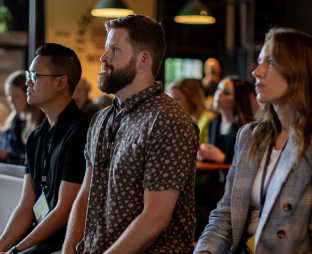


I’ll be honest: I walked into Shoptalk Fall 2026 in Nashville wondering how much a retail-heavy conference would have to say to B2B. I walked out with a notebook full of answers, a lunch I’ll be thinking about for months, and more validation for how we approach B2B ecommerce at Directive than I expected.
Here’s why it worked: I didn’t wander. I pre-scheduled 1:1 time with a handful of industry folks before day one, and every single one showed up ready to talk. I sat in sessions where actual B2B operators (not just vendors) were on stage. And I stuck around after almost every one, because the hallway conversations were where the real stuff came out. MasterB2B put together an incredible programming called “The B2B Exchange” that did not disappoint.
If you lead ecommerce, digital, or marketing at a B2B brand, this one’s for you. Here’s what I learned, what surprised me, and what I think you should do about it.
1. Your Product Data is Your Best Merchandiser
The Four Hands session on redesigning product discovery reframed merchandising in a way I loved. Strong merchandising on your site and in your product feeds simply means you can answer a buyer’s question about a product quickly and clearly. That’s it.
One stat stopped me cold: B2B ecommerce brands have only about 11 to 15% of their products backed by a strong digital advertising experience. That leaves most of the catalog invisible, both to people and to the AI agents that are starting to scrape product feeds and do the shopping for them. Conversational merchandising is coming, and it runs on your feed. If your feed isn’t ready, you will fall behind.
2. In AI Search: The Goal is to Be Recommended, Not Suggested
The AEO/GEO session gave me a framework I’ve already repeated about ten times. Every piece of content, every page, and every product feed should pass three questions:
- Is it fetchable?
- Is it extractable?
- Is it “chosen-ready”?
Your site has to be human-ready and machine-ready at the same time. Practically, that means clean, complete, accurate product data SKU by SKU, product schema on every PDP, and your unique value prop living on every PDP too, not just your homepage.
The bigger mindset shift: when a B2B buyer searches, they aren’t only doing technical discovery. They’re researching who to trust. Favorite Daughter’s keynote (video highlight here) landed the same point from the other direction. If you want AI to recommend you, you need a lot of content from multiple genuine experts, inside and outside your company. One brand voice on one blog won’t cut it.
3. Your Next/Future Buyer Will Not Call You. Full Stop.
The stat I can’t stop thinking about from Shoptalk 2026: roughly 65 to 70% of Gen Z B2B buyers don’t want to make a phone call to buy. Not “prefer not to.” They straight up don’t want to.
The session on winning younger, digitally savvy buyers in wholesale made it clear that the goal of digital transformation is removing discovery and purchase friction for people who are new to your brand. And these buyers won’t accept the unknown, so your deals and offers need to be louder and more frequent than feels natural.
The tricky part is that your site now has two jobs. It has to serve the 50-year-old electrician who has bought from you for 20 years and the guy who just started out and needs bulk parts for a building project this week. Both are your customer so you have to value them as such!
4. Selling Direct Isn’t a Betrayal of Your Channel if You’reIntentional About It
The debate on selling direct and living with channel conflict was the best session of the day for me, and the conversations after it were even better.
The consensus: your DTC or transactional options should be products that are not highly technical, not high touch, and low risk. Done right, direct selling becomes a front door that introduces digitally native young buyers to “old school” brands. Done carelessly, you start competing with the partners you still need for service and installation.
This was hugely affirming for how we run feed management at Directive: Advertise, Exclude, Route. Not every SKU should be advertised directly. Some should be excluded. Some should be routed to the partner who’s best positioned to serve that buyer. And don’t overlook the non-pallet use cases; small orders can still be extremely profitable.
5. Amazon Might Be Your Review Engine, Not Your Profit eEgine
This came up in the debate session and again in the first keynote, so I’m paying attention. The general view in the room was that Amazon Ads don’t show strong ROI for many of these brands yet. But every brand still has to play on Amazon, because it’s where reviews get generated, and reviews feed trust everywhere else. I want to unpack this one more, and I’ll be writing about it soon.
6. Better Purchasing Software is a Growth Lever Hiding in Plain Sight
Some industries, like colleges and universities, have to buy through procurement. Name that with your team and build for it. The sessions about using software that allows procurement to get approvals fast & efficiently made the case that this is its own shopping modality, and one that can lift both new customer acquisition and repeat orders.
The flip side is just as important: letting smaller “little b” buyers use a credit card for their first purchase makes your brand far more accessible to small and mid-sized businesses.
7. Ecommerce is A Customer Generation Engine
This is the heartbeat behind how we think about B2B ecommerce at Directive, so I was pumped to hear it said out loud on stage. Your store isn’t just a checkout. It’s where buyers vet you, and where word of mouth turns into a website visit.
The personalization session shared a great example: utilizing digital sales rooms which start with customized landing pages by customer type that sales sends to bulk buyers. They saw a real lift in CTR and lead quality, even with LinkedIn targeting in the mix.
8. Treat Creators Like Business Partners, Not Talent
Favorite Daughter’s keynote was a gut check. Sara Foster argued there’s no more valuable hire right now than a creator, and that you should judge creators by how engaged their audience is, not how big it is. Her line that stuck with me: “Closed mouths don’t get fed.” If you’re not getting loud in your industry, someone else is.
Related: where you advertise is itself a trust signal. Your media mix builds (or erodes) your brand, and brand equity and speed shouldn’t be treated as separate goals.
9. Hire People Who’ve Done Time in DTC
This came up in at least three different sessions. The best B2B ecommerce hires right now are people with DTC experience. They bring grit, intellectual curiosity, and a willingness to have the hard conversations that make a team better. Look for people who want to do more than just get by.
What I’m Taking Home
If I had to boil the whole week down to one sentence, it’s this: B2B buyers are looking for partners who can do both. Ecommerce and search. Paid media and organic visibility. Feeds and content. In almost every conversation I had, the gap wasn’t a lack of agencies. It was a lack of teams who could connect those pieces without handing the brand off between five vendors.
A few things I’d do this quarter if I were leading ecommerce at a B2B brand:
- Audit what percentage of your catalog actually has strong product data, schema, and a clear value prop on the PDP.
- Decide, SKU by SKU, what you advertise, what you exclude, and what you route to partners.
- Make your first purchase easy for a buyer who will never call you, including a credit card option.
- Get more of your real experts publishing, so AI has something worth recommending.
I came home tired, inspired, and more convinced than ever that ecommerce is the most underused growth lever in B2B. If any of this hits close to home for your team, I’d love to talk.
Find me on LinkedIn or reach out to the Directive Commerce team.
-
 Lauren Marks
Did you enjoy this article?
Share it with someone!